Loading and unloading is one of the most important activities in a warehouse, distribution centre or manufacturing facility. When the height of a truck bed does not match the warehouse floor, forklifts and pallet trucks cannot move efficiently between the vehicle and loading dock. Choosing the right Dock Leveler Manufacturer in India can help businesses select a suitable loading-bay solution based on their vehicle movement, load requirements and operating conditions.
A dock leveler solves this problem by creating a controlled bridge between the loading dock and the vehicle. It helps material-handling equipment move across the height difference while supporting smoother loading and unloading operations.
However, not every loading bay requires the same dock leveler. Hydraulic, mechanical and other configurations are available for different operating conditions.
This guide explains how dock levelers work, the major types available, where they are used and the factors businesses should consider when selecting a dock leveler for their facility.
What Is a Dock Leveler?
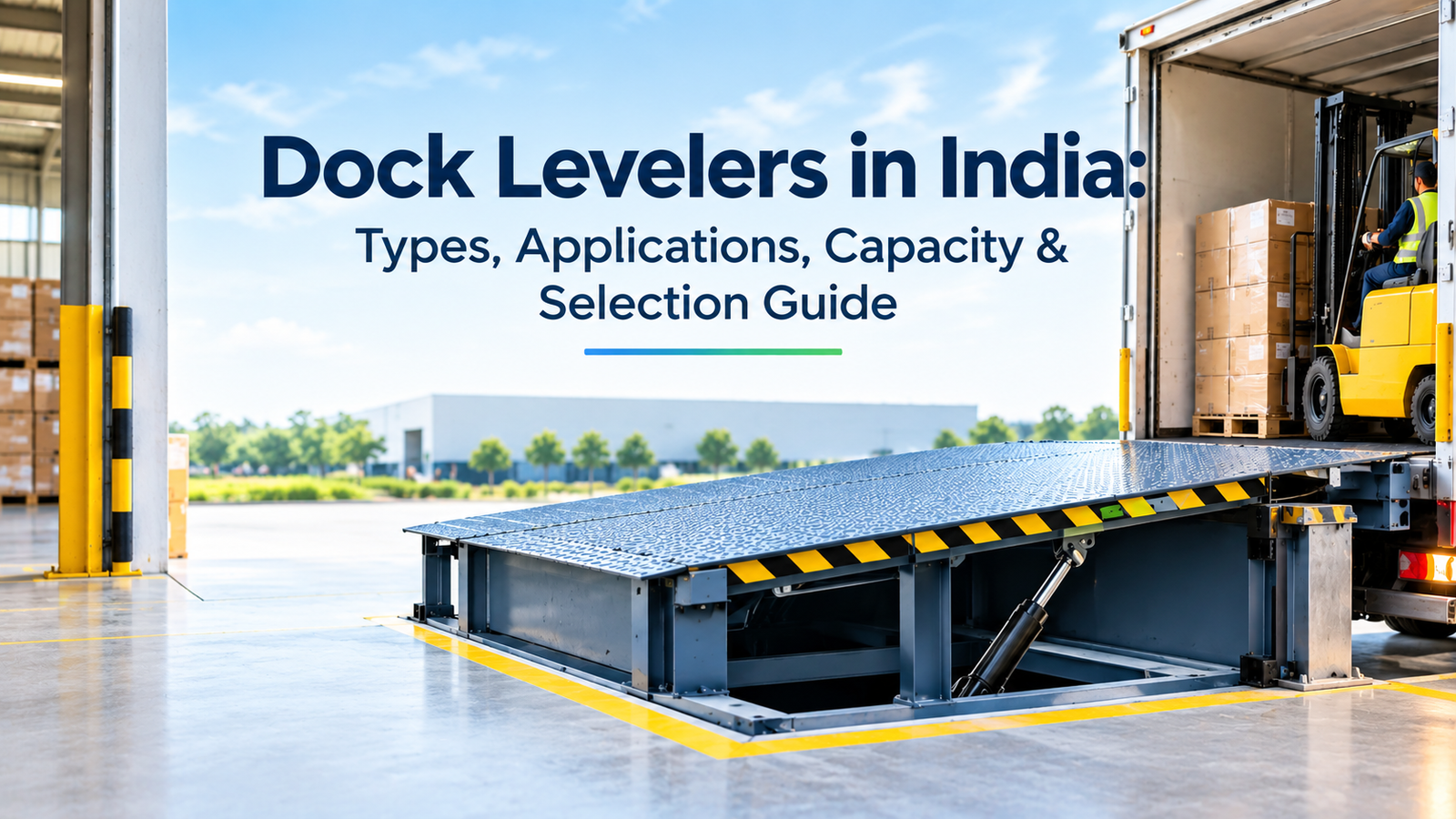
A dock leveler is a loading-bay platform designed to bridge the height difference between a warehouse dock and the bed of a truck or trailer.
When a vehicle is positioned at the loading dock, the dock leveler adjusts its platform and lip to create a suitable transition between the dock floor and vehicle bed.
This allows forklifts, pallet trucks and other material-handling equipment to move more efficiently between the warehouse and vehicle.
Dock levelers are commonly used in:
• Warehouses
• Distribution centres
• Logistics facilities
• Manufacturing plants
• FMCG facilities
• Cold-chain facilities
• Packaging units
• Industrial loading bays
Why Are Dock Levelers Important?
Truck bed heights can vary depending on vehicle design, load condition and fleet type. A fixed loading platform cannot always provide a suitable transition for every vehicle.
A properly selected dock leveler can help:
Improve Loading and Unloading Efficiency
A controlled transition between the dock and truck can make it easier for forklifts and pallet trucks to move goods.
Reduce Manual Handling
Efficient dock equipment can reduce the need for unnecessary manual movement of materials during loading and unloading.
Support Safer Material Movement
A suitable dock leveler provides a designed transition between the warehouse floor and vehicle bed rather than relying on improvised ramps or unsuitable temporary solutions.
Reduce Loading Delays
Busy warehouses depend on predictable loading-bay operations. A suitable dock leveler can help maintain smoother truck turnaround.
Support Different Vehicle Heights
A properly specified system can accommodate the operating range required by the facility's vehicle fleet.
Types of Dock Levelers in India
The right dock leveler depends on the loading bay design, vehicle movement, operating frequency, capacity and level of automation required.
1. Hydraulic Dock Leveler
Hydraulic dock levelers use a hydraulic power system to raise and lower the platform and position the lip on the vehicle bed.
They are particularly suitable for loading bays where frequent operation and controlled movement are important.
Hydraulic systems are commonly considered for:
• Distribution centres
• Large warehouses
• Manufacturing plants
• High-traffic loading bays
• Logistics facilities
Their powered operation can reduce the physical effort required from operators and provide controlled positioning.
2. Mechanical Dock Leveler
Mechanical dock levelers use mechanical components to operate the platform and lip.
They can be suitable where a simpler operating arrangement is preferred and loading frequency is moderate.
Mechanical systems may be considered for warehouses and industrial facilities where the operating pattern does not require a powered hydraulic system.
The suitability should be evaluated based on traffic volume, operating conditions, maintenance expectations and site requirements.
3. Electro-Hydraulic Dock Leveler
Electro-hydraulic dock levelers use an electric power unit with hydraulic components to control the platform movement.
They can be useful for facilities that require powered operation and consistent control at the loading bay. Aurotoshi's electro-hydraulic range, for example, is built around a 1.1 to 1.5 kW power pack with a single push-button, deadman-mode control, and is rated for 6T or 9T dynamic load (15T or 22T uniformly distributed load), certified by TÜV Nord to EN 1398:2009.
The correct configuration depends on the required capacity, dimensions, duty cycle and site conditions.
Hydraulic vs Mechanical Dock Leveler
The choice between hydraulic and mechanical operation should be based on how the loading bay is used.
|
Factor |
Hydraulic Dock Leveler |
Mechanical Dock Leveler |
|
Operation |
Powered |
Mechanical |
|
Operator Effort |
Lower |
Higher |
|
Suitable Usage |
Frequent operation |
Low to moderate operation |
|
Automation |
Higher |
Lower |
|
Power Requirement |
Required |
Generally not dependent on powered operation |
|
Typical Applications |
Busy warehouses, distribution centres, manufacturing |
Controlled-traffic warehouses and industrial facilities |
There is no universal winner. The correct choice depends on the facility's traffic pattern, available infrastructure and operational requirements.
How Does a Dock Leveler Work?
A typical dock leveler works in a sequence that allows the platform to bridge the gap between the dock and vehicle.
First, the vehicle is positioned at the loading dock. The dock leveler platform is then raised or lowered according to the operating configuration.
The lip extends toward the vehicle bed and rests on the appropriate loading surface. This creates a transition that allows forklifts and other material-handling equipment to move between the dock and truck.
After loading or unloading is completed, the dock leveler is returned to its designated position.
The exact operating mechanism varies between hydraulic, mechanical and other dock leveler configurations.
How to Choose the Right Dock Leveler for a Warehouse
Selecting a dock leveler requires more than checking the maximum load capacity.
1. Determine the Required Load Capacity
Capacity should account for the combined operating load, including the material-handling equipment and the goods being carried.
For example, the specification should consider the forklift or pallet truck and its maximum working load rather than looking only at the pallet weight.
Aurotoshi's dock leveler range is designed around different loading requirements, with published configurations rated at 6T and 9T dynamic load, selection based on the actual operating conditions rather than the pallet weight alone.
2. Check Truck and Trailer Heights
The vehicle fleet using the loading bay should be considered before selecting the dock leveler.
If a facility handles multiple vehicle types, the operating range needs to accommodate the relevant variation.
3. Evaluate Loading Frequency
A dock used several times per day may have very different requirements from a high-throughput distribution centre operating continuously.
Operating frequency is an important factor when deciding between different dock leveler configurations.
4. Check Pit Dimensions
The available pit dimensions can influence the dock leveler size and configuration.
Before finalising the equipment, the installation area and existing civil structure should be checked.
5. Consider Forklift and Material-Handling Equipment
The equipment travelling across the dock leveler matters. Forklift size, wheel configuration, operating load and movement frequency should all be considered.
6. Consider Safety Requirements
Loading bays are high-activity areas where vehicles, forklifts, operators and goods are moving around the same space.
The dock leveler should therefore be selected and installed with appropriate safety provisions for the application.
7. Consider Service and Maintenance
A loading-bay system is part of the daily logistics operation. Downtime can affect dispatch schedules and vehicle turnaround.
Before selecting a Dock Leveler Manufacturer in India, consider installation support, preventive maintenance, spare parts availability and after-sales service.
Dock Leveler Applications Across Industries
Warehouses and Distribution Centres
Warehouses with regular truck loading and unloading can use dock levelers to create a smoother transition between the dock and vehicle. Aurotoshi's Hindustan Unilever distribution centre project is an example of this at scale: 269 installations were completed across two distribution centres in four months, with the facilities supporting approximately 700 to 800 truck movements daily, using TÜV Nord-tested dock levelers with dynamic load testing exceeding 12 tonnes.
Manufacturing Plants
Manufacturing facilities may use dock levelers at dispatch and receiving areas for raw materials, components and finished products.
FMCG and Food Distribution
Fast-moving goods require efficient loading and unloading operations. Dock equipment can help support organised movement between storage and transport.
Logistics and 3PL Facilities
Third-party logistics facilities often handle multiple vehicle types and high dispatch volumes, making correct loading-bay equipment important for daily operations.
Cold-Chain Facilities
Cold-chain operations require careful management of loading-bay movement and temperature-controlled areas. Dock levelers can form part of an integrated loading-bay system.
For cold-chain applications, dock levelers may be considered alongside dock doors, seals and other loading-bay equipment. National cold-chain engineering guidance also treats the dock leveler as part of an integrated dock system rather than an isolated piece of equipment.
Dock Leveler Safety Considerations
Safety should be considered during product selection, installation and everyday operation.
Important considerations include:
• Selecting the correct capacity
• Following the manufacturer's operating instructions
• Preventing use beyond the specified load rating
• Ensuring the vehicle is properly positioned
• Maintaining the dock leveler regularly
• Inspecting mechanical and hydraulic components
• Training operators appropriately
• Keeping the loading area clear of unnecessary obstacles
The exact safety provisions depend on the dock leveler design and site conditions.
What Makes a Good Dock Leveler Manufacturer in India?
A reliable Dock Leveler Manufacturer in India should understand that dock equipment needs to be matched to the actual loading operation.
The manufacturer should be able to evaluate:
• Vehicle types
• Loading frequency
• Required capacity
• Forklift specifications
• Platform dimensions
• Pit dimensions
• Operating environment
• Safety requirements
• Installation conditions
• Maintenance requirements
Aurotoshi offers dock leveler solutions for warehouses, logistics centres, manufacturing facilities and other loading-bay applications, backed by more than 30 years of manufacturing experience. Its product range includes hydraulic, mechanical and electro-hydraulic configurations, with selection based on operational and site requirements.
As an Entrance Automation Company in India, Aurotoshi also focuses on application-specific requirements when selecting loading-bay solutions. For dock levelers, factors such as vehicle types, load capacity, pit dimensions, forklift traffic and operating frequency are considered to determine the appropriate configuration.
Dock Leveler vs Temporary Loading Ramp
Temporary ramps can be useful in certain situations, but they should not automatically be treated as a substitute for permanently engineered loading-bay equipment.
A dock leveler is designed as part of the loading dock and provides a controlled transition between the dock and vehicle.
For facilities with regular forklift traffic and frequent truck loading, purpose-designed dock equipment can provide a more consistent loading process.
Frequently Asked Questions
What is a dock leveler used for?
A dock leveler is used to bridge the height difference between a loading dock and a truck or trailer bed. It provides a suitable transition for forklifts and other material-handling equipment during loading and unloading.
Which type of dock leveler is best for a warehouse?
The best type depends on loading frequency, vehicle heights, required capacity, pit dimensions, forklift traffic and available infrastructure. Hydraulic dock levelers are generally suitable for frequent operations, while mechanical systems can be considered for applications with moderate operating requirements.
What is a hydraulic dock leveler?
A hydraulic dock leveler uses hydraulic components and a power unit to raise and lower its platform and position the lip onto the vehicle bed. It provides controlled powered operation and is suitable for many high-use loading bays.
What is a mechanical dock leveler?
A mechanical dock leveler uses mechanical components to operate the platform and lip. It can be suitable for facilities where a simpler operating system is preferred and loading frequency is moderate.
How do I calculate dock leveler capacity?
Capacity should be determined from the combined operating load, including the forklift or other material-handling equipment and the maximum load being carried. The manufacturer's engineering recommendation should be followed for the final specification.
Are dock levelers suitable for warehouses?
Yes. Dock levelers are widely used in warehouses, distribution centres, manufacturing facilities and logistics operations where trucks need to be loaded and unloaded efficiently.
How do I choose a Dock Leveler Manufacturer in India?
Consider the manufacturer's product range, engineering capability, load-capacity options, installation support, safety provisions, customisation capability, service network and after-sales support. The manufacturer should also be able to evaluate the specific loading-bay conditions before recommending a system.
What factors affect dock leveler selection?
Important factors include vehicle height variation, load capacity, forklift type, loading frequency, pit dimensions, platform size, operating environment, safety requirements and the desired level of automation.
Conclusion
A dock leveler is an important part of an efficient loading bay. Choosing the right system requires an understanding of the vehicles, material-handling equipment, operating frequency, load requirements and physical design of the facility.
Hydraulic, mechanical and electro-hydraulic dock levelers can serve different operational needs. Instead of selecting a system based only on price or capacity, businesses should evaluate the complete loading process and the long-term requirements of the facility.
For warehouses, distribution centres, manufacturing plants and logistics facilities, working with an experienced Dock Leveler Manufacturer in India can help ensure that the equipment is correctly specified, installed and supported.
Aurotoshi provides dock leveler solutions designed for different loading-bay requirements, with product selection based on capacity, vehicle movement, operating frequency and site conditions.