Introduction
Public transportation systems depend on efficient ticketing to keep passengers moving and reduce congestion at ticket counters. As metro, railway and urban transit networks expand, passengers increasingly expect convenient ways to purchase tickets without waiting for assistance. This has made Cashless Ticket Vending Machines an important part of modern self-service ticketing infrastructure.
For transit operators, selecting the right machine involves more than choosing a touchscreen or payment terminal. The solution must support the required payment methods, integrate with the existing ticketing infrastructure, handle passenger usage reliably and fit the available station space.
This guide explains how cashless ticket vending machines work, their key features, payment options, applications and the factors to consider when selecting a solution for a transportation project.
What Is a Cashless Ticket Vending Machine?
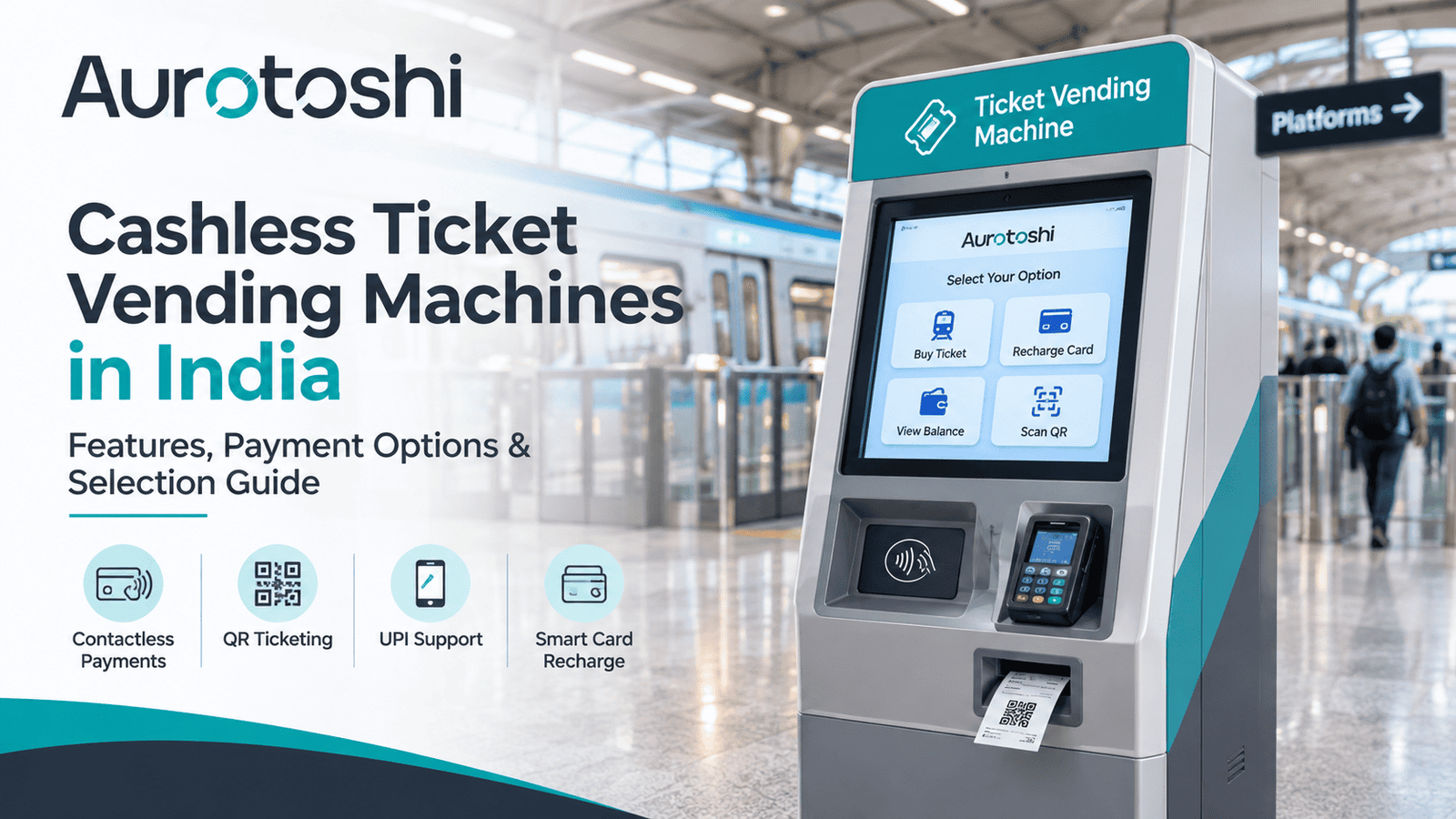
A cashless ticket vending machine is a self-service kiosk that allows passengers to purchase travel tickets or recharge eligible travel cards using supported digital payment methods. Instead of depending on cash transactions at a staffed counter, passengers can complete the ticketing process through an interactive interface.
Depending on the system configuration, a cashless ticket vending machine may support QR-based ticketing, contactless card payments, NFC-enabled transactions and integration with an Automatic Fare Collection (AFC) system.
How Does a Cashless Ticket Vending Machine Work?
A cashless ticket vending machine guides passengers through a series of steps to complete a ticket purchase or supported travel card transaction.
The exact process depends on the transit operator's ticketing system and the machine's configuration. A typical transaction follows these steps:
• Select the ticket or service: The passenger uses the touchscreen to choose a ticket, destination, journey option or supported card recharge service.
• Review the transaction: The machine displays the selected service and applicable fare for confirmation.
• Choose a payment method: The passenger selects an available digital payment option, such as a supported bank card or contactless payment method.
• Complete payment: The payment module processes the transaction through the configured payment infrastructure.
• Receive the ticket: Once the transaction is approved, the machine issues the ticket through its integrated thermal printer or provides the configured digital ticketing output.
• Update the transaction record: Transaction information can be communicated to the connected ticketing system, depending on the integration.
For QR-based ticketing, the machine may print a QR-enabled ticket that passengers can use at compatible entry gates. The complete passenger journey depends on the compatibility between the vending machine, ticketing platform and station access-control equipment.
Cashless vs Conventional Ticket Vending Machines
Not every transit location has the same ticketing requirements. Some operators want to move towards digital-only transactions, while others need to continue accepting cash and coins alongside card payments.
|
Comparison Factor |
Cashless Ticket Vending Machine |
Conventional Ticket Vending Machine |
|
Payment Approach |
Digital and supported contactless payments |
Cash, coins and digital payment options, depending on configuration |
|
Cash Handling |
Does not require banknote or coin-handling modules |
Optional banknote acceptor, recycler and coin acceptor |
|
Installation Format |
Can be available in compact wall-mounted configurations |
Typically a larger, floor-standing configuration |
|
Passenger Interface |
Touchscreen-based self-service interface |
Touchscreen-based self-service interface |
|
Ticket Output |
Thermal QR ticket printing, depending on configuration |
Thermal ticket and receipt printing |
|
Suitable Applications |
Locations prioritising cashless transactions and space efficiency |
Locations requiring a wider range of payment options |
A cashless configuration may be suitable where digital payments are the preferred mode of transaction and installation space is limited. A conventional configuration may be more appropriate where passengers need the option to pay using cash or coins.
Payment Methods Supported by Modern Ticket Vending Machines
Payment flexibility is an important consideration when planning self-service ticketing infrastructure. The available options depend on the machine model, payment hardware and integration requirements.
Common payment technologies include:
1. QR-Based Ticketing
QR-based ticketing allows passengers to use tickets containing a machine-readable QR code. A compatible ticket vending machine can print QR-enabled tickets, which can then be validated through a supported scanning system at the station.
2. Contactless Bank Card Payments
Contactless payment modules allow passengers to make eligible transactions using supported bank cards. Depending on the installed payment hardware, the system may support EMV contactless standards and other approved payment technologies.
3. NFC and Smart Card Technologies
Near Field Communication (NFC) enables short-range communication between compatible devices and readers. Smart card technologies such as MIFARE and DESFire may also be used in transit environments, depending on the fare collection system.
4. UPI and Other Digital Payment Options
UPI is an important digital payment method in India's public transport environment. However, UPI acceptance should be confirmed against the specific payment application, QR workflow and software integration being supplied.
Project teams should verify whether the proposed machine supports the required UPI transaction flow rather than assuming that every QR-enabled machine automatically accepts UPI payments.
Important Features to Consider in a Cashless Ticket Vending Machine
A ticket vending machine operates in a public environment where passengers with different levels of technical familiarity use the equipment throughout the day. Its design and hardware should therefore be evaluated against practical station requirements.
Touchscreen Interface
A clear touchscreen interface helps passengers select tickets, review transaction details and complete payments. Screen size, display clarity, touch responsiveness and interface layout should be considered when comparing machines.
Thermal Ticket Printing
The printer is an important component when the machine issues physical tickets or QR codes. Print speed, print quality, paper compatibility and ease of maintenance should be reviewed.
Secure Payment Hardware
Payment modules must be compatible with the required card and contactless payment standards. Depending on the project, this may include EMV contactless, NFC and supported smart card technologies.
Payment security should be assessed through the actual certifications and approvals applicable to the installed payment module.
Network Connectivity and AFC Integration
A ticket vending machine may need to exchange transaction information with a central ticketing platform. Network connectivity, software compatibility and integration protocols should be evaluated before installation.
Passenger Guidance and Language Support
Passengers should be able to understand the available options and complete transactions without unnecessary assistance. Clear instructions, readable screen layouts, audio guidance where required and local language customisation can improve usability.
Compact Installation and Physical Protection
The machine's dimensions, mounting arrangement, electrical requirements and protection rating should match the proposed installation location.
Monitoring and Maintenance
Transit operators should assess how the machine can be monitored and maintained after commissioning. Useful considerations include system diagnostics, printer checks, payment-module servicing, software updates and spare-part availability.
Where Are Ticket Vending Machines Used?
Ticket vending machines are used in public transportation environments where passengers need access to self-service ticket purchasing and related services.
Metro Stations
Metro stations are among the common applications for automatic ticket vending machines. Machines can support ticket purchases, QR ticket issuance and eligible travel card transactions.
Railway Stations
Railway facilities may use ticket vending machines to provide self-service ticketing options. The required configuration depends on the railway operator's fare structure, ticketing platform, passenger volume and accepted payment methods.
Bus Transit Networks
Bus terminals and urban transit facilities can consider self-service ticketing kiosks where the ticketing system supports automated purchase and validation.
Integrated Urban Transit Facilities
Transit hubs that connect multiple transport services may require ticketing equipment that works with a common or interconnected fare collection platform.
How to Choose the Right Ticket Vending Machine for a Transit Project
The right machine depends on the operational requirements of the station or transport network. Before finalising a model, project teams should evaluate the following factors.
1. Understand Passenger Payment Requirements
Start by identifying which payment methods the operator needs to support. If the project requires digital and contactless transactions, a cashless configuration may be appropriate. If cash and coin payments are still required, a conventional machine with the relevant modules may be a better choice.
2. Evaluate Available Installation Space
Measure the proposed installation area and check the required passenger clearance. Compact wall-mounted machines can be useful in space-constrained locations, while floor-standing machines may be considered where a larger equipment footprint is available.
3. Check Ticketing System Compatibility
Confirm that the machine can communicate with the existing ticketing platform, fare calculation system and validation equipment. Compatibility should be reviewed before procurement to avoid integration issues during commissioning.
4. Review Hardware Specifications
Compare the touchscreen, processor, memory, storage, printer, scanner, card reader and connectivity options against the project's requirements.
5. Consider Accessibility and Passenger Usability
Review screen positioning, interface design, language options and audio guidance requirements. The machine should be planned for the needs of the passenger population and the applicable accessibility requirements.
6. Assess Security and Payment Compliance
Check the certifications and approvals relevant to the payment modules being supplied. Also review physical cash security where the selected model includes banknote or coin-handling components.
7. Plan Maintenance and Lifecycle Support
Ask about preventive maintenance, spare parts, software support, breakdown response and service coverage. These factors are important for equipment operating in public-facing transit environments.
Integration of Ticket Vending Machines with Automatic Fare Collection Systems
A ticket vending machine is one component of a wider public transportation ticketing environment. For a coordinated passenger journey, it may need to communicate with the operator's central ticketing platform and compatible validation equipment.
An Automatic Fare Collection (AFC) system can connect different parts of the ticketing process, including ticket issuance, fare management, passenger validation and transaction records.
For example, a passenger may purchase a QR-enabled ticket from a vending machine and use it at a compatible AFC gate. The ticket format, validation rules and transaction data must work together across the connected equipment.
When planning this integration, project teams should review:
• Compatibility with the existing AFC platform.
• Communication between the vending machine and central system.
• Ticket formats and validation requirements.
• Payment processing and transaction records.
• Network connectivity and system monitoring.
• Software configuration, testing and commissioning.
Aurotoshi Ticket Vending Machine Solutions for Public Transportation
Aurotoshi develops self-service ticketing solutions for mass transit applications, with configurations designed around different payment and installation requirements. Aurotoshi (An Aurionpro Group Company) brings 30+ years of manufacturing experience, three manufacturing units and OEM/ODM capabilities to this range, together with the transit technology and digital payments expertise of its parent group.
The conventional Auro-TA-STVM, part of Aurotoshi's range of ticket vending machines, supports a range of payment options, including bank cards, contactless technologies and optional banknote and coin-handling modules. Its configuration includes an 18.5-inch capacitive multi-touch display, an 80 mm thermal QR code and receipt printer, and a 650VA UPS.
For projects prioritising digital transactions and compact installation, the Auro-TA-CTVM offers a wall-mounted cashless configuration. It includes a 15-inch capacitive touchscreen, Intel Core i5 processor, 8GB RAM, 256GB SSD and a 58 mm thermal printer with a specified print speed of up to 120 mm/s. Optional card reader and 2D barcode scanner configurations are available.
The cashless model also supports relevant NFC and contactless technologies, subject to the selected hardware configuration. Its compact dimensions of 480 x 120 x 730 mm can be considered for locations where floor space is limited.
Aurotoshi's cashless ticket vending machines were also part of the inauguration of UPI-enabled cashless ticket vending machines at Noida Metro Aqua Line, reflecting the application of self-service digital ticketing in an operational metro environment.
The choice between the two configurations should be based on payment requirements, available space, ticketing-system compatibility and the operating needs of the transit authority.
Conclusion
Ticket vending machines play an important role in making public transportation ticketing more convenient and accessible. However, selecting the right solution requires careful consideration of payment methods, passenger interface, installation space, system integration, security and long-term maintenance.
A cashless ticket vending machine can be suitable for transit environments prioritising digital transactions and compact installation. A conventional TVM may be more appropriate where cash, coins and digital payments need to be supported together.
For transit authorities and project teams, the most effective approach is to match the machine configuration with the actual requirements of the station and its ticketing infrastructure.
Frequently Asked Questions
1. What is a cashless ticket vending machine?
A cashless ticket vending machine is a self-service kiosk that allows passengers to purchase tickets or complete supported travel card transactions using digital payment methods. Depending on its configuration, it may support contactless cards, NFC and QR-based ticketing.
2. What is the difference between a cashless and a conventional ticket vending machine?
A cashless ticket vending machine is designed for digital payment transactions and does not require cash-handling modules. A conventional ticket vending machine can be configured with banknote and coin acceptors alongside supported card and digital payment options.
3. Which payment methods can a ticket vending machine support?
Depending on the model and payment configuration, ticket vending machines can support bank cards, contactless payments, NFC, smart cards, QR-based ticketing and cash or coins. The exact options should be confirmed with the equipment supplier.
4. Can a cashless ticket vending machine accept UPI payments?
A cashless ticket vending machine can support UPI payments when the required payment application, QR workflow and software integration are configured. UPI compatibility should be confirmed for the specific model and project before procurement.
5. Where are ticket vending machines commonly installed?
Ticket vending machines are commonly considered for metro stations, railway stations, bus terminals and integrated public transportation facilities. Their configuration depends on passenger requirements, available space and the operator's ticketing system.
6. Can ticket vending machines integrate with an AFC system?
Yes. Ticket vending machines can be integrated with compatible Automatic Fare Collection systems. This allows ticket issuance and transaction information to work with the wider fare collection and passenger validation process, subject to system compatibility.
7. What should be considered when selecting a metro ticket vending machine?
Important factors include payment options, passenger interface, ticket printing, card reader compatibility, AFC integration, installation space, accessibility, security and maintenance support. The machine should match the station's operational and passenger requirements.
8. What maintenance does a ticket vending machine require?
Maintenance may include touchscreen inspection, printer cleaning, payment-module checks, network and software updates, power-supply testing and inspection of cash-handling components where fitted. The maintenance schedule should follow the equipment manufacturer's recommendations and the operator's service requirements.
9. What hardware specifications should be checked before buying a ticket vending machine?
Review the display, processor, RAM, storage, printer, card reader, barcode scanner, network connectivity, power requirements, enclosure, mounting arrangement and relevant payment certifications. The final specification should be selected according to the intended application.