Introduction
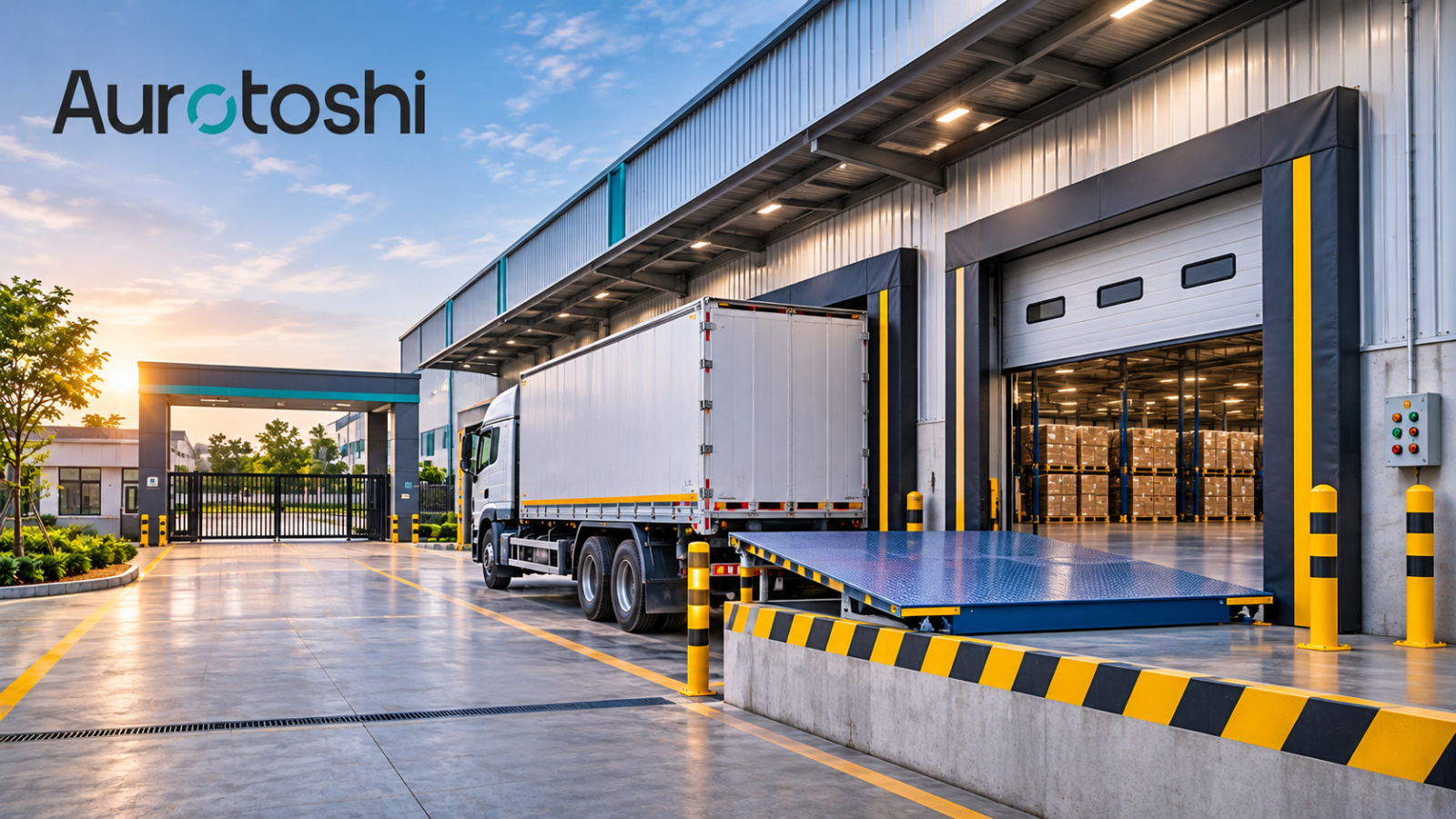
A warehouse loading bay is one of the busiest areas of a logistics centre, distribution facility or manufacturing plant. Trucks and trailers arrive throughout the day, while forklifts and other material-handling equipment move goods between vehicles and the warehouse floor. A poorly planned loading bay can lead to delays, unsafe movements, equipment wear and inefficient use of space.
Choosing the right loading bay equipment is an important part of warehouse planning. A suitable Dock Leveler Manufacturer in India can help businesses identify equipment that matches their vehicle movement, load capacity, dock dimensions and operating requirements.
However, a loading bay is not just about the dock leveler. Industrial doors, vehicle access gates, safety systems and the layout of the facility also influence how efficiently the operation runs.
This guide explains the key components of a warehouse loading bay, how to select suitable equipment and what businesses should consider when planning a safe and efficient loading area.
What Is a Warehouse Loading Bay?
A warehouse loading bay is a designated area where goods are transferred between a building and vehicles such as trucks, trailers and delivery vans.
Loading bays are commonly found in:
• Warehouses and distribution centres
• Manufacturing plants
• E-commerce fulfilment centres
• Pharmaceutical facilities
• Food and beverage warehouses
• Logistics parks
• Cold storage facilities
The loading bay connects vehicle movement with internal material handling. Its design should account for the types of vehicles arriving, the equipment used to move goods, the available space and the expected frequency of operations.
For example, a facility handling frequent forklift movements may require a different loading bay arrangement from a small warehouse that receives only a few deliveries each day.
Key Equipment Used in Warehouse Loading Bays
A well-planned loading bay may include several types of equipment. Each serves a different purpose, and the right combination depends on the facility's operational requirements.
1. Dock Levelers
Dock levelers bridge the height difference between the warehouse loading dock and the vehicle bed. They create a transition surface that allows forklifts, pallet trucks and other material-handling equipment to move goods between the building and the vehicle.
Trucks and trailers do not always arrive at the same height. Differences in vehicle type, suspension, loading conditions and dock design can make direct movement difficult.
A dock leveler helps manage these variations.
Common types include:
Pit-Based Dock Levelers
Pit-based dock levelers are installed in a recessed pit at the loading dock. They provide a wider adjustment range and are suitable for permanent loading bays where regular or high-volume operations are expected.
Edge-of-Dock Levelers
Edge-of-dock levelers are mounted at the dock edge. They can be useful for existing facilities where excavation is difficult or where a smaller adjustment range is sufficient.
Platform Dock Levelers
Platform dock levelers are surface-mounted and do not require a recessed pit. They can be considered for facilities where pit construction is not practical.
How the Three Types Compare
Aurotoshi's hydraulic dock levelers are available in all three configurations. The published specifications show how much the adjustment range and capacity differ, which is why the type should be chosen from the dock layout first.
|
Specification |
Pit-Based |
Edge-of-Dock |
Platform |
|
Best For |
Permanent high-traffic docks |
Retrofit on existing docks |
Docks that cannot be excavated |
|
Rated Dynamic Load |
6T or 9T |
6T |
6T or 9T |
|
Platform Length |
2,500, 3,000 or 3,500 mm |
700 mm |
2,500 or 3,000 mm |
|
Travel Range |
+350 to 415 mm / -250 to -350 mm |
+100 mm / -75 mm |
+350 to 375 mm / -250 to -300 mm |
|
Working Gradient |
12.5% (about 7 degrees) |
8.75% (about 5 degrees) |
12.5% (about 7 degrees) |
Higher capacities are available on request. Aurotoshi's dock levelers are TÜV Nord certified to EN 1398:2009.
How to Choose the Right Dock Leveler
The selection process should begin with the actual operating conditions of the loading bay.
Consider the following factors:
|
Selection Factor |
What to Consider |
|
Load Capacity |
The combined requirements of the forklift, goods and material-handling equipment |
|
Vehicle Bed Height |
The range of heights of trucks and trailers using the dock |
|
Pit Dimensions |
Available width, length and depth for pit-based equipment |
|
Operating Frequency |
Number of loading and unloading cycles expected |
|
Platform Construction |
Suitable anti-slip surface and structural strength |
|
Safety Features |
Hose-burst protection, toe guards and controlled operation |
|
Maintenance |
Access to service support, spare parts and preventive maintenance |
The right model should be selected according to the actual application rather than choosing equipment based only on its maximum rated capacity.
2. Industrial Doors for Loading Bays
Industrial doors provide secure access to loading areas while supporting vehicle movement, goods protection, temperature control and safe warehouse operations.
3. Entrance Gates for Vehicle Access and Perimeter Security
A warehouse loading bay is connected to the wider facility through vehicle access points. Entrance gates help control the movement of trucks, employees, visitors and other authorised vehicles.
The gate configuration should match the site's driveway width, available space, ground conditions and security requirements.
For industrial and logistics facilities, common gate configurations include:
• Sliding gates: Suitable for entrances where sufficient side run-back space is available.
• Telescopic gates: Useful for wide openings where side space is limited.
• Cantilever gates: Suitable where a ground track is impractical because of conditions such as flooding, silt or uneven ground.
• Swing gates: Appropriate where there is enough clearance for the gate leaf to open.
• Retractable gates: Useful for wide openings where conventional side run-back is unavailable.
When evaluating an Entrance Gate Manufacturer in India, businesses should consider the gate's dimensions, operating requirements, safety systems and compatibility with access-control equipment. For scale, Aurotoshi's sliding gates support gate weights from 500 kg up to 6,000 kg with clear openings up to 50 metres for a single leaf.
For example, RFID readers, automatic number plate recognition (ANPR), loop detectors and intercom systems can help manage vehicle access at industrial entrances.
The gate should also be planned according to the movement of vehicles within the facility. A gate that is suitable for a main perimeter entrance may not be the right choice for a smaller loading area with limited space.
How Dock Levelers, Doors and Gates Work Together
Loading bay equipment should be considered as part of a complete operating system.
A typical warehouse vehicle movement sequence may involve:
• A truck enters the facility through the designated entrance gate.
• The vehicle moves towards the assigned loading bay.
• The loading bay door opens to provide access to the warehouse.
• The dock leveler bridges the height difference between the dock and the vehicle bed.
• Forklifts or other material-handling equipment transfer goods.
• The dock leveler and door return to their safe positions after loading or unloading.
• The vehicle exits through the designated access route.
Each component has a specific role. The entrance gate manages vehicle access, the industrial door controls the building opening, and the dock leveler supports the movement of goods between the vehicle and the warehouse.
Planning these components together can help reduce operational conflicts and improve the movement of vehicles and materials.
Important Safety Considerations for Warehouse Loading Bays
Loading bays involve moving vehicles, heavy loads and powered equipment. Proper safety planning helps reduce operational risks.
Vehicle Positioning: Ensure correct vehicle alignment and secure positioning before loading or unloading.
Dock Leveler Safety: Check for hose-burst protection, anti-slip platforms, toe guards and maintenance safety supports.
Door Safety: Consider spring-break protection, safety edges, photocells and finger-safe panels.
Pedestrian Movement: Provide separate pedestrian routes and controlled vehicle access.
Preventive Maintenance: Regularly inspect hydraulic systems, doors, sensors, cables and control systems.
How to Plan a Loading Bay for Different Industrial Applications
Not every warehouse has the same requirements. Equipment selection should reflect the facility's operations.
Warehouses and Distribution Centres
Warehouses with frequent vehicle movement should consider loading bay equipment that matches their expected traffic, vehicle types and material-handling requirements.
Important considerations include:
• Number of loading bays
• Truck and trailer movement
• Forklift traffic
• Dock height variations
• Loading and unloading frequency
• Available space for vehicle movement
Aurotoshi's Hindustan Unilever distribution centre project is a relevant example at scale: 269 installations were completed across two distribution centres in four months, supporting approximately 700 to 800 truck movements daily, with TÜV Nord-tested dock levelers and dynamic load testing exceeding 12 tonnes.
Manufacturing Facilities
Manufacturing plants may require loading bays for raw materials, finished goods and internal logistics.
The equipment should be selected according to the goods being handled, vehicle dimensions, operating frequency and the layout of the production and dispatch areas.
Pharmaceutical and Food Facilities
Facilities handling temperature-sensitive or hygiene-sensitive goods may need to consider insulation, environmental separation and the movement of materials between internal and external areas.
The door configuration and loading bay arrangement should support the facility's operating requirements.
Cold Storage Facilities
Cold storage loading bays need particular attention to temperature control and the movement of goods.
Insulated industrial doors may help maintain indoor conditions, while the loading bay layout should support efficient vehicle and material movement.
The right equipment depends on the facility's temperature requirements, vehicle traffic and loading process.
Which Loading Bay Setup Suits Which Facility?
The right combination depends on the facility's situation. This table summarises the setup that usually fits each case.
|
Facility Situation |
Dock Leveler |
Industrial Door |
Entrance Gate |
|
High-volume distribution centre with permanent docks |
Pit-based hydraulic |
Sectional door chosen for frequent cycles |
Sliding or telescopic gate sized to truck traffic |
|
Existing warehouse where excavation is not practical |
Edge-of-dock or platform |
Sectional door sized to the available headroom |
Gate chosen from the available run-back |
|
Cold storage or pharmaceutical facility |
Type chosen from the dock layout |
Insulated sectional door |
Gate chosen from site layout and access control needs |
|
Manufacturing plant with mixed vehicle traffic |
Pit-based or platform, by dock layout |
Sectional door chosen for duty cycle |
Telescopic or cantilever where space or ground conditions limit |
|
Wide perimeter opening with no side space |
Not applicable |
Not applicable |
Retractable gate |
Use the table as a starting point, then confirm dock heights, pit dimensions, traffic volumes and headroom on site before fixing the specification.
Common Mistakes to Avoid When Planning a Loading Bay
A loading bay may become inefficient when equipment is selected without considering the complete operation.
Common mistakes include:
• Selecting equipment only by price: The lowest initial cost may not reflect the equipment's suitability for the expected operating conditions.
• Ignoring vehicle height variations: Different vehicles may have different bed heights, affecting the required dock leveler adjustment range.
• Underestimating traffic frequency: Equipment should be selected according to the expected number of operating cycles.
• Overlooking available space: Door headroom, gate run-back space and vehicle manoeuvring areas should be considered before installation.
• Ignoring safety features: Equipment should include suitable safety provisions for the application.
• Neglecting maintenance: Preventive maintenance and service support should be considered during procurement.
• Treating equipment separately: Dock levelers, doors and entrance gates should be planned as part of the same facility movement strategy.
Choosing the Right Industrial Loading Bay Equipment Manufacturer
Choose a manufacturer based on product range, load capacity, safety standards, customisation, installation support, spare parts and after-sales service.
A reliable Dock Leveler Manufacturer in India should assess site conditions, loading requirements and available space before recommending suitable equipment. In-house manufacturing, technical expertise and maintenance support also contribute to long-term performance.
Aurotoshi Loading Bay Solutions
Aurotoshi (An Aurionpro Group Company) provides industrial automation solutions for warehouses, logistics centres and manufacturing facilities, backed by 30+ years of manufacturing experience, three manufacturing units and OEM/ODM capabilities.
The capabilities a loading bay project can draw on include:
• Dock levelers, sectional doors and entrance gates from one manufacturer, so the leveler, door and gate for each bay can be specified together.
• Dock levelers designed, manufactured and supported in India.
• Delivery at scale, as the Hindustan Unilever distribution centre rollout showed.
• Structured service with AMC, 24-hour breakdown response for AMC customers and in-house spares dispatched from Ghaziabad.
Its dock leveler range includes pit-based hydraulic, edge-of-dock and platform configurations. The equipment can be selected according to loading bay dimensions, vehicle bed heights, load capacity and operating requirements.
For facilities that require controlled building openings, Aurotoshi also offers industrial sectional doors. As a Sectional Door Manufacturer in India, Aurotoshi provides industrial and commercial configurations designed for different opening requirements.
The industrial sectional door uses insulated 40 mm double-skin galvanised panels with a CFC-free PUF core. The product range also includes full-vision sectional doors for applications where visibility and an architectural appearance are important.
Aurotoshi's industrial entrance gates are available in sliding, telescopic, cantilever, swing and retractable configurations. These can be selected according to available space, ground conditions, vehicle movement and perimeter security requirements.
The right combination of loading bay equipment depends on the facility's layout and operating needs. Evaluating these requirements before procurement can help businesses select equipment that supports safe, efficient and dependable loading operations.
Frequently Asked Questions
What is a warehouse loading bay?
A warehouse loading bay is a designated area where goods are transferred between a building and vehicles such as trucks and trailers. It typically includes equipment such as dock levelers, industrial doors and safety systems.
What equipment is required for a loading bay?
Common loading bay equipment includes dock levelers, industrial doors, vehicle restraints or positioning systems where required, safety devices and material-handling equipment.
What is the purpose of a dock leveler?
A dock leveler bridges the height difference between the warehouse dock and the vehicle bed. It creates a transition surface for forklifts and other material-handling equipment.
What are the different types of dock levelers?
Common types include pit-based dock levelers, edge-of-dock levelers and platform dock levelers. The suitable configuration depends on the dock layout, available space, vehicle height variations and operating requirements.
What is the difference between a pit-based and an edge-of-dock leveler?
A pit-based leveler sits in a recessed pit and offers a wider adjustment range, which suits permanent high-traffic docks. An edge-of-dock leveler is mounted at the dock edge with a smaller adjustment range, which suits existing docks where excavation is difficult.
How do I choose the right dock leveler for my warehouse?
Consider the load capacity, vehicle bed height range, pit dimensions, operating frequency, platform construction, safety features and maintenance requirements.
How do I choose a Dock Leveler Manufacturer in India?
Look for a manufacturer that offers pit-based, edge-of-dock and platform configurations, publishes load capacities and certification, can recommend a type from your dock layout, and provides installation, spare parts and maintenance support. Experience with high-volume warehouse projects is also a useful indicator.
Which industrial door is suitable for a warehouse loading bay?
The right door depends on the opening dimensions, available headroom, operating frequency, insulation requirements, traffic movement and safety needs.
Which entrance gate is suitable for a warehouse?
Sliding gates are suitable where side run-back is available. Telescopic gates can be considered for wide openings with limited side space, while cantilever gates are useful where a ground track is impractical. The final selection depends on site conditions and security requirements.
Why is loading bay safety important?
Loading bays involve vehicles, heavy loads, forklifts and powered equipment. Suitable equipment, safe movement routes, controlled operation and preventive maintenance help support safer loading and unloading operations.
Can dock levelers and industrial doors be planned together?
Yes. Dock levelers and industrial doors perform different functions but should be considered together. The door controls the building opening, while the dock leveler bridges the height difference between the dock and the vehicle bed.
Conclusion
An efficient warehouse loading bay depends on more than the installation of individual products. Dock levelers, industrial doors and entrance gates should be selected according to the facility's layout, vehicle movement, operating frequency, safety requirements and available space.
A well-planned loading bay can support smoother material handling, more organised vehicle movement and dependable warehouse operations.
For industrial facilities in India, evaluating equipment specifications, application requirements and service support before procurement is an important step towards selecting the right loading bay solution, starting with a Dock Leveler Manufacturer in India that can match the equipment to the dock. A manufacturer's in-house design, manufacturing and service capability is what keeps that match working over the life of the equipment.