Introduction
Modern transportation infrastructure depends on more than trains, platforms and terminals. The systems that manage passenger access, verify travel permissions and maintain safe movement also play an important role in daily operations. As metro networks, airports and urban transit facilities expand, transportation authorities need reliable automation equipment that can handle passenger movement while meeting operational and security requirements.
This makes choosing the right Passenger Automation System Manufacturer in India an important decision for project developers, consultants, infrastructure companies and transportation authorities.
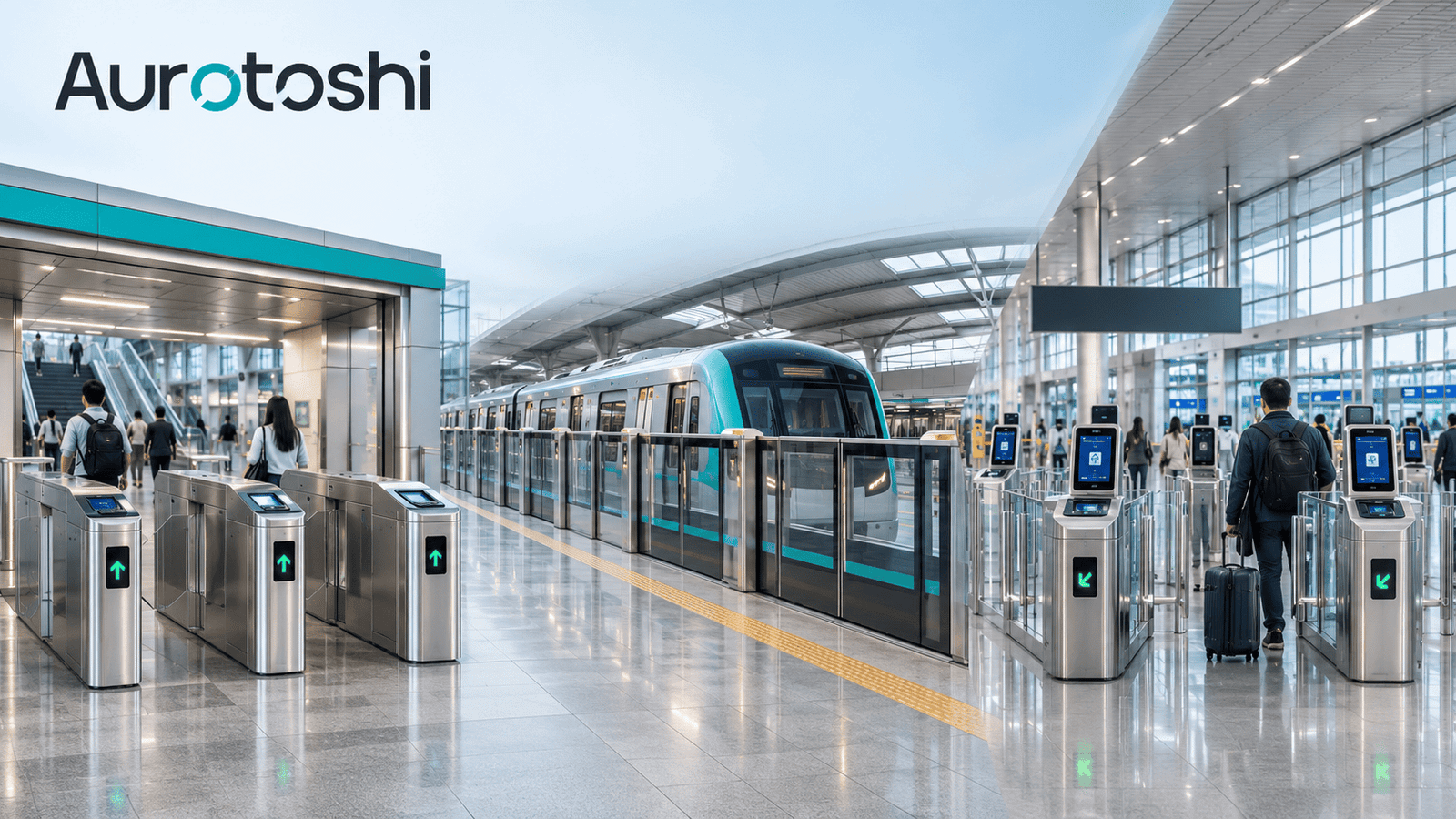
However, passenger automation is not a single type of equipment. Automatic Fare Collection (AFC) Gates manage fare-based entry and exit, Platform Screen Doors create a controlled barrier between metro platforms and tracks, and Automatic Border Control Gates support identity verification and automated immigration processing.
Each solution serves a different purpose. This guide explains their applications, key features and selection considerations to help project teams identify the right equipment for their requirements.
What Is Passenger Automation Equipment?
Passenger automation equipment refers to systems designed to manage, control or improve passenger movement across transportation facilities. These systems can automate activities such as ticket validation, controlled access, identity verification and platform safety operations.
Depending on the facility, passenger automation may include:
• Automatic Fare Collection Gates for ticket-based entry and exit.
• Platform Screen Doors for controlled separation between metro platforms and railway tracks.
• Automatic Border Control Gates for automated passenger identity verification and immigration processing.
1. AFC Gates for Metro Stations and Mass Transit Systems
Automatic Fare Collection Gates are used to manage passenger entry and exit at controlled transit points. They validate an approved ticket or travel credential before allowing a passenger to pass through the gate.
An AFC gate typically works with a ticketing system that may support contactless smart cards, QR-coded tickets, tokens and other configured payment or authentication technologies.
How Do AFC Gates Work?
A passenger presents a valid travel credential at the reader. The connected fare collection system checks the credential and authorises passage when the transaction is approved. The gate then opens to allow the passenger through and closes according to its configured operating sequence.
Types of AFC Gates
AFC Flap Gates: Flap gates use retractable wings to control passenger passage. They are commonly considered for metro stations and other transit facilities where controlled access, compact installation and efficient passenger movement are required.
AFC Swing Gates: Swing gates use moving wings that open to provide a passage lane. Depending on the configuration, wider lanes can accommodate passengers with luggage, wheelchairs or other accessibility requirements.
Key points to evaluate are passenger throughput, ticket media compatibility, anti-tailgating, safety sensors, bidirectional operation, emergency integration and connectivity with the operator's fare collection and monitoring systems.
2. Platform Screen Doors for Metro Station Safety
Platform Screen Doors (PSDs) are installed along metro station platforms to create a physical barrier between passengers and the track area. They help reduce the risk of accidental falls, unauthorised track access and other platform-related safety incidents.
Unlike AFC gates, which control entry through a fare collection point, Platform Screen Doors operate as part of the station's train and platform safety infrastructure.
How Do Platform Screen Doors Work?
Platform Screen Doors are designed to operate in coordination with train movements. When a train arrives and stops at the designated position, the door control system receives the required operating signals and coordinates the opening of the platform doors with the train doors.
After passengers board and alight, the doors close according to the configured operating sequence and safety checks.
The exact control arrangement depends on the metro system, train configuration and signalling architecture.
Where Are Platform Screen Doors Used?
Platform Screen Doors can be considered for:
• Underground metro stations.
• Elevated metro stations.
• At-grade metro stations.
• Automated and driverless metro networks, subject to system compatibility.
• Transit platforms where controlled separation from the track area is required.
Key features to check include train door synchronisation, obstacle detection, signalling and train control integration, emergency operation, door control and monitoring, and the station layout and train stopping positions.
Aurotoshi Platform Screen Door Project Reference
Aurotoshi successfully commissioned half-height Platform Screen Gates (PSG) for Mumbai Metro Line 2B Phase 1 at three stations: BSNL, Mankhurd and Mandale. The project involved coordination with the wider metro infrastructure and demonstrates Aurotoshi's involvement in platform passenger safety equipment.
For metro projects, the final Platform Screen Door configuration should be developed around station geometry, train specifications, signalling interfaces and the operational requirements of the network.
3. Automatic Border Control Gates for Airports and Immigration
Automatic Border Control (ABC) Gates are designed to automate parts of the immigration clearance process at airports and other authorised border checkpoints. They enable eligible travellers to complete identity verification through configured document readers and biometric authentication systems.
Unlike AFC gates, which validate travel tickets, border control gates are designed for identity verification and controlled immigration access.
How Do Automatic Border Control Gates Work?
A traveller presents a passport or travel document, the system verifies identity and biometrics against the authority's requirements, and the gate opens once authorisation is confirmed, with sensors monitoring the passage for tailgating.
The exact process, eligibility rules and verification procedures are determined by the relevant immigration authority and system configuration.
Features to check include passport and biometric reader support, mantrap configuration, anti-tailgating, emergency override, immigration system integration and access monitoring.
AFC Gates vs Platform Screen Doors vs Automatic Border Control Gates
Although these systems are used in transportation infrastructure, their functions are different. Understanding the distinction is essential when preparing equipment specifications for a project.
|
Comparison Factor |
AFC Gates |
Platform Screen Doors |
Automatic Border Control Gates |
|
Main Purpose |
Fare-based passenger access |
Platform and track-area separation |
Automated identity verification and immigration access |
|
Common Locations |
Metro stations and mass transit facilities |
Metro platforms |
Airports and authorised border checkpoints |
|
Primary Operation |
Ticket or credential validation |
Synchronised door operation |
Document and biometric verification |
|
System Integration |
AFC and ticketing systems |
Signalling and train control systems |
Immigration and identity verification systems |
|
Key Requirement |
Passenger throughput and fare validation |
Train synchronisation and platform safety |
Identity verification and controlled access |
|
Typical Users |
Commuters |
Metro passengers |
Eligible travellers |
Selecting one of these systems should start with the operational purpose of the facility, not simply the equipment's appearance or opening mechanism.
Which System Does Your Requirement Point To?
|
If Your Project Needs To |
Start With |
Why |
|
Control fare-based entry and exit at a station |
AFC gates |
They validate the ticket or travel credential at the gate line |
|
Accommodate luggage or wheelchair users at fare gates |
AFC swing gates with a wider lane |
A wider lane keeps accessible passage within the same gate line |
|
Separate passengers from the track edge |
Platform screen doors |
They provide the physical barrier and work with train doors and signalling |
|
Automate identity checks and immigration clearance |
Automatic border control gates |
They verify documents and biometrics before allowing passage |
How to Choose the Right Passenger Automation System Manufacturer in India
For large transportation projects, selecting a manufacturer involves more than comparing product specifications. The supplier should understand the installation environment, equipment interfaces, safety requirements and long-term operational needs.
Here are some important factors to evaluate.
1. Evaluate Experience in Transportation Applications
Review whether the manufacturer has experience with the type of infrastructure being developed. Metro fare collection, platform safety and airport immigration processing involve different technical and operational requirements.
Ask for relevant project references, installation details and the manufacturer's role in each project.
2. Check Product Configurations and Technical Specifications
Compare equipment specifications against the project requirements. Important details may include:
• Passenger or traveller throughput.
• Passage width and lane configuration.
• Cabinet and wing materials.
• Sensor arrangement and detection capabilities.
• Drive mechanism and operating speed.
• Emergency operating modes.
• Environmental and ingress protection ratings.
• Power and communication requirements.
The selected specification should match the actual application rather than simply choosing the model with the highest stated performance.
3. Verify System Integration Capabilities
Passenger automation equipment often needs to communicate with other infrastructure.
For AFC gates, check compatibility with ticketing systems and fare collection platforms. For Platform Screen Doors, review signalling and train control interfaces. For border control gates, confirm compatibility with the document readers, biometric equipment and immigration systems specified by the authority.
Integration requirements should be agreed upon before equipment procurement and installation.
4. Review Safety and Security Features
Safety and security requirements vary by equipment type.
For AFC gates, examine obstacle detection, anti-tailgating and emergency modes. For Platform Screen Doors, review door interlocks, obstruction detection and emergency operation. For border control gates, evaluate mantrap arrangements, identity verification interfaces and passage monitoring.
Request technical documentation for the features included in the proposed configuration.
5. Consider Accessibility and Passenger Flow
The equipment should support the needs of different passenger groups. Review standard and wider passage options, interface usability, lane placement and movement requirements for passengers with reduced mobility.
For high-footfall facilities, equipment layout and the number of operating lanes should be planned according to expected traffic patterns.
6. Assess Manufacturing and Project Execution Capabilities
Large infrastructure projects require coordination between equipment design, manufacturing, testing, delivery, installation and commissioning.
Understand the manufacturer's role at each stage. Also review its ability to customise equipment according to site dimensions, project interfaces and authority requirements.
7. Evaluate Maintenance and After-Sales Support
Passenger automation equipment operates in public-facing environments where equipment downtime can affect daily operations.
Before selecting a supplier, review:
• Preventive maintenance schedules.
• Availability of spare parts.
• Breakdown support arrangements.
• Sensor and drive-system servicing.
• Software and control-system support.
• Maintenance documentation and service records.
A clear service arrangement is important for managing equipment throughout its operational life.
Aurotoshi's Passenger Automation Solutions for Transportation Infrastructure
Aurotoshi provides passenger automation equipment for mass transit and transportation applications, with solutions covering fare collection, platform safety and automated border access. Aurotoshi (An Aurionpro Group Company) brings 30+ years of manufacturing experience, three manufacturing units and OEM/ODM capabilities to these ranges, supported by the transit technology expertise of its parent group.
Automatic Fare Collection Gates
Aurotoshi offers AFC flap and swing gate configurations for metro stations and other mass transit environments. The Auro-TA-SBAFC configuration supports CSC, EMV and paper QR ticket media, with a specified throughput of 40 to 45 persons per minute, 16 pairs of IR sensors and a passage clearance option of 550 mm or 900 mm.
The configuration also includes anti-tailgating, anti-pass-back and fire alarm integration features.
Explore Aurotoshi's AFC Gates for more information about the available variants and specifications.
Platform Screen Doors
Aurotoshi manufactures Platform Screen Door solutions for underground, elevated and at-grade metro station applications. The systems are designed around platform layout, train configuration and integration with signalling and train control systems.
Learn more about Platform Screen Doors and their applications in metro infrastructure.
Automatic Border Control Gates
Aurotoshi's automatic border control gate configurations are designed for controlled passenger processing at airports and authorised immigration facilities.
The Auro-TA-ABC3610 model specifies a mantrap operating arrangement, 23 pairs of IR sensors, passport and biometric access-control options and a throughput of 20 to 25 travellers per minute.
Explore Automatic Border Control Gates to understand the available configurations and integration options.
Conclusion
Choosing the right passenger automation system requires a clear understanding of the facility's operational needs. AFC Gates manage ticket-based access, Platform Screen Doors support metro platform safety, and Automatic Border Control Gates help automate identity verification and immigration processing.
For transportation authorities and project consultants, the selection process should consider technical specifications, system compatibility, passenger requirements, safety features, manufacturing capabilities and long-term service support.
Working with a manufacturer that understands these application-specific requirements can help project teams plan equipment that fits the wider transportation infrastructure and its operating environment.
Frequently Asked Questions
1. What is a passenger automation system?
A passenger automation system uses equipment and software to manage activities such as ticket validation, passenger access, identity verification and platform safety in transportation facilities. Examples include AFC gates, Platform Screen Doors and automatic border control gates.
2. What is an AFC gate in a metro station?
An Automatic Fare Collection gate is an access-control gate that validates a passenger's ticket or travel credential before allowing entry or exit. It can support technologies such as contactless smart cards, QR codes and other configured ticketing media.
3. What is the difference between AFC gates and Platform Screen Doors?
AFC gates control passenger access based on ticket validation at station entry and exit points. Platform Screen Doors create a physical barrier between the metro platform and the track area and operate in coordination with train movements.
4. What is an automatic border control gate?
An automatic border control gate is a self-service immigration processing system that uses compatible travel document readers and biometric verification technologies to support identity checks and controlled passenger passage.
5. How many passengers can an AFC gate process per minute?
The throughput depends on the gate model, ticket validation process, passenger behaviour and operating conditions. Aurotoshi's specified AFC swing flap configuration has a stated throughput of 40 to 45 persons per minute.
6. How do Platform Screen Doors improve passenger safety?
Platform Screen Doors create a barrier between passengers and the track area. When designed and integrated correctly, they help reduce the risk of accidental falls, unauthorised track access and platform-related incidents.
7. Can Platform Screen Doors work with driverless metro systems?
Yes, Platform Screen Doors can be designed for automated and driverless metro applications. Their operation must be coordinated with the train control, signalling and door control architecture of the specific metro network.
8. What should I check before selecting an AFC gate manufacturer in India?
Review the manufacturer's product configurations, throughput specifications, ticket media compatibility, passage widths, safety sensors, anti-tailgating features, system integration capabilities, project experience and after-sales support.
9. What factors should be considered when choosing a Platform Screen Door manufacturer in India?
Important considerations include station layout, train dimensions, door synchronisation, signalling compatibility, obstruction detection, emergency operation, control-system architecture, testing and maintenance support.
10. What should I look for in an automatic border control gate manufacturer in India?
Evaluate passport reader compatibility, biometric integration, mantrap configuration, anti-tailgating features, emergency operation, immigration-system interfaces, throughput and maintenance support. The proposed configuration should also meet the requirements defined by the relevant authority.