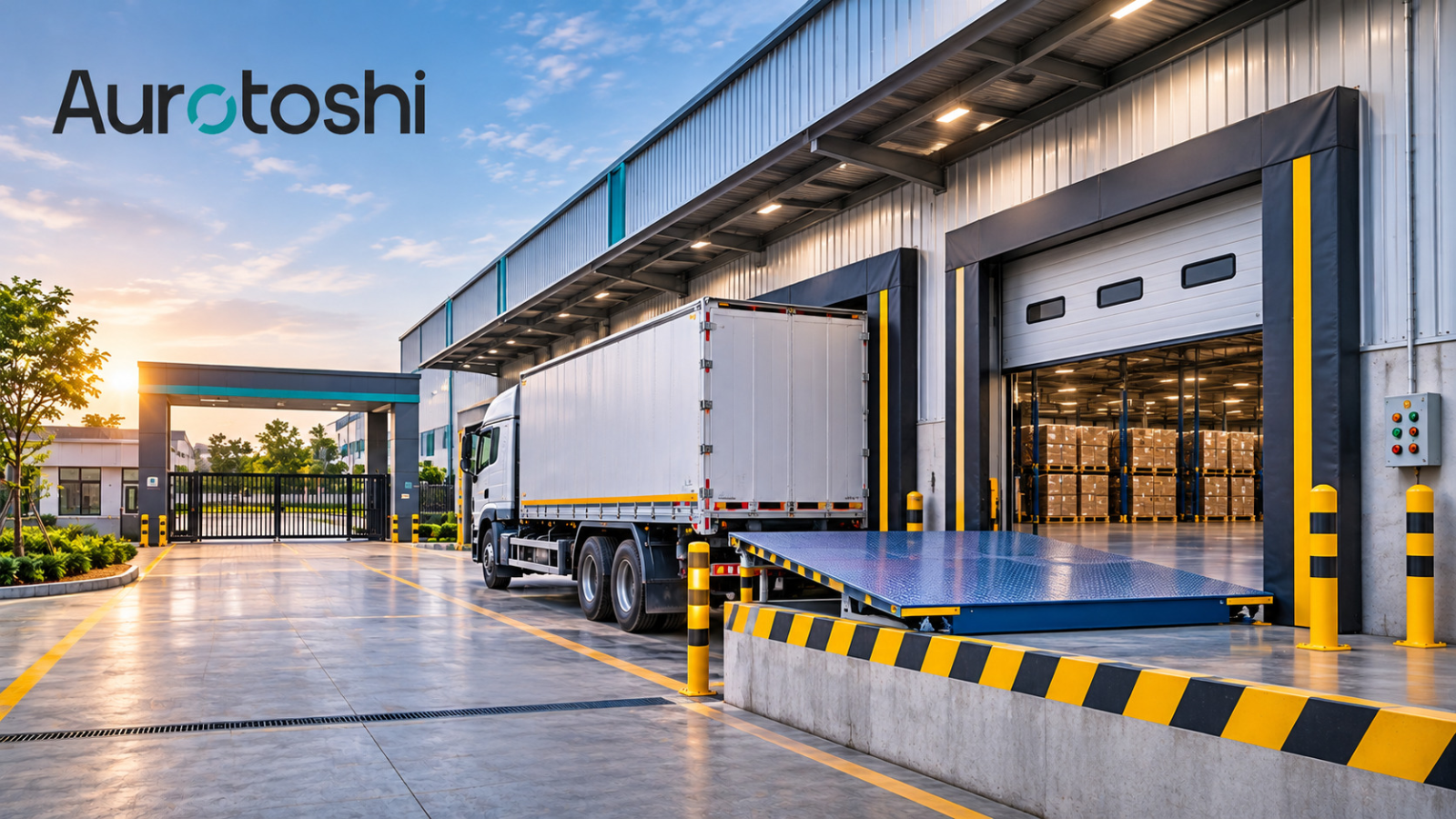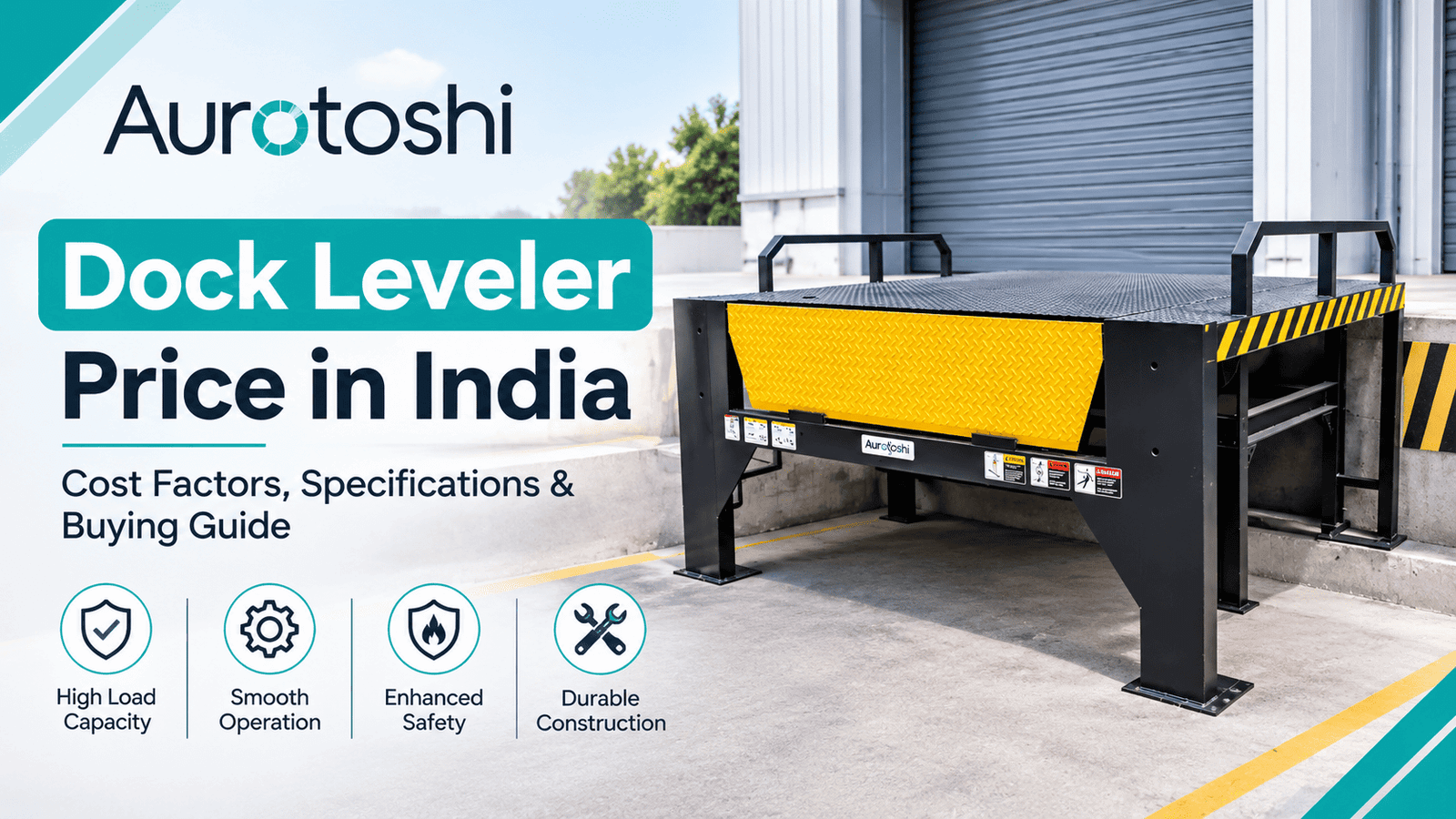
The Dock Leveler Price in India depends on several factors, including load capacity, platform dimensions, hydraulic mechanism, safety features and installation requirements. For warehouses, manufacturing plants and logistics facilities, choosing the right equipment involves more than comparing initial costs. Businesses need to consider loading requirements, operating frequency, vehicle compatibility and long-term reliability. As a Dock Leveler Manufacturer in India, Aurotoshi offers electro-hydraulic dock levelers designed for different industrial loading bay requirements.
A dock leveler bridges the height difference between a loading dock and a truck or trailer, allowing forklifts and pallet trucks to move goods safely between the vehicle and warehouse floor. Selecting the right configuration helps maintain efficient material movement and reduces interruptions during loading and unloading operations.
What Determines the Dock Leveler Price in India?
There is no single price for every industrial dock leveler. The final quotation depends on equipment specifications, installation arrangements and the operational requirements of the facility.
Some of the main factors influencing dock leveler pricing include:
• Required dynamic load capacity and uniformly distributed load (UDL).
• Platform width, length and steel plate thickness.
• Hydraulic power pack and operating mechanism.
• Type of installation and loading bay arrangement.
• Safety features and compliance requirements.
• Civil work, electrical connections and commissioning.
• Customisation based on site dimensions and operating conditions.
Understanding these factors helps procurement teams compare quotations based on actual product specifications rather than selecting equipment solely on initial cost.
6 Factors That Affect Hydraulic Dock Leveler Price
1. Load Capacity and Weight Requirements
Load capacity is one of the first specifications to consider when selecting a hydraulic dock leveler. The equipment must support the loads generated by forklifts, pallet trucks and transported goods during loading operations.
Aurotoshi's pit-based hydraulic dock leveler configurations include:
• 6T and 9T dynamic load capacity.
• 15T and 22T uniformly distributed load (UDL) options for corresponding configurations.
• Higher capacities available on request, subject to engineering requirements.
Dynamic load and UDL represent different loading conditions. Both should be checked when evaluating the suitability of a dock leveler for a particular application. The selected capacity should account for the loaded forklift weight, cargo and operating conditions.
2. Platform Dimensions and Material Construction
Platform dimensions influence the design and construction of a dock leveler. The platform should provide sufficient space for forklift movement while accommodating the vehicles operating at the loading bay.
Aurotoshi's pit-based dock leveler configurations include:
|
Specification |
Available Options |
|
Platform Width |
2,000 mm / 2,200 mm |
|
Platform Length |
2,500 mm / 3,000 mm / 3,500 mm |
|
Platform Plate |
6 mm / 8 mm |
|
Lip Plate |
10 mm / 12 mm |
Steel thickness, reinforcement, platform dimensions and anti-slip construction should be considered when comparing different models. A larger platform or customised configuration may require additional material and engineering, which can influence the overall equipment quotation.
3. Hydraulic Power Pack and Operating Mechanism
A hydraulic dock leveler uses an electro-hydraulic mechanism to raise and lower the platform and position its lip against the vehicle bed. The hydraulic system generally includes a power pack, cylinders, control unit and associated safety components.
Aurotoshi's specified pit-based models use a 1.1 to 1.5 kW electro-hydraulic power pack with single push-button deadman-mode control.
When comparing hydraulic dock leveler specifications, businesses should check the power pack rating, hydraulic components, control arrangement and availability of replacement parts.
4. Type of Dock Leveler
The installation configuration is another important factor affecting equipment selection and project cost.
Pit-Based Hydraulic Dock Leveler
A pit-based dock leveler is installed within a recessed opening in the loading dock. It provides a full working platform and is suitable for permanent loading bays with regular forklift and vehicle movement.
Edge-of-Dock Leveler
An edge-of-dock leveler is installed at the dock edge and is useful when an existing facility cannot accommodate a conventional recessed pit. It has a more limited operating range and is suitable for specific vehicle height differences.
Platform Dock Leveler
A platform dock leveler is surface-mounted and can be considered when pit excavation is not practical. It provides an alternative for facilities that need loading bay equipment without conventional pit construction.
The table below shows which type usually fits which situation, because choosing the wrong type is a more expensive mistake than choosing the wrong specification.
|
Your Dock Situation |
Usually the Right Type |
Price Implication |
|
New or permanent dock with regular forklift traffic |
Pit-based hydraulic |
Includes pit preparation, but gives the full working range |
|
Existing dock where excavation is not practical |
Edge-of-dock or platform |
Avoids major civil work, with a smaller operating range |
|
Mixed fleet with large vehicle height differences |
Pit-based, with a longer platform |
Longer platforms add material and engineering cost |
5. Safety Features and Certifications
Safety features are essential when evaluating an industrial dock leveler. They help protect operators and equipment during loading and unloading operations.
Important features to check include:
• Anti-slip platform: Chequered steel construction helps provide traction for forklifts and pallet trucks.
• Hose-burst protection: Helps prevent sudden platform descent if a hydraulic hose fails.
• Telescopic toe guards: Help protect operators from moving platform pinch points.
• Deadman-mode control: Stops movement when the operator releases the control.
• Maintenance safety struts: Support the platform during maintenance activities.
Aurotoshi's specified models reference TÜV Nord testing and CE conformity to EN 1398:2009. Buyers should verify the applicable certification and test documentation for the selected model.
6. Installation and Site Requirements
The total cost of a dock leveler installation can also depend on the condition and layout of the existing loading bay.
For pit-based models, the facility needs a suitable recessed opening with the correct dimensions and structural provisions. Additional civil work may be required if the existing dock needs modification.
Other considerations include:
• Electrical connections for hydraulic operation.
• Equipment transportation and positioning.
• Installation and commissioning.
• Vehicle approach and clearance requirements.
• Site-specific modifications.
Businesses should confirm whether these requirements are included in the manufacturer's quotation or charged separately.
Additional Costs to Consider Before Buying a Dock Leveler
Apart from the equipment itself, buyers should evaluate the long-term costs associated with installation, maintenance and servicing.
Civil and Structural Work: Pit preparation, concrete modifications and structural provisions may be required depending on the selected configuration.
Electrical Installation: Electro-hydraulic systems need suitable power connections and control arrangements.
Preventive Maintenance: Hydraulic hoses, cylinders, valves, hinges and power packs require periodic inspection.
Spare Parts and Repairs: Availability of replacement components and technical support can influence equipment downtime and maintenance expenses.
A quotation should clearly explain the equipment scope, installation requirements, warranty terms and after-sales support.
How to Choose the Right Dock Leveler for Your Facility
Before requesting a dock leveler quotation, evaluate the following points:
• Measure the loading bay: Record dock height, available installation space and pit dimensions.
• Check vehicle compatibility: Identify the types of trucks and trailers regularly used at the facility.
• Calculate load requirements: Consider forklift weight, cargo weight and dynamic loading conditions.
• Select platform dimensions: Choose suitable width, length and lip configuration.
• Evaluate operating frequency: Consider daily vehicle movements and expected loading intensity.
• Check safety requirements: Review safety devices, certification and operating controls.
• Compare service support: Check spare parts availability, preventive maintenance and breakdown assistance.
These considerations help businesses select a dock leveler that meets their operational requirements while avoiding unnecessary equipment or installation expenses.
Why Choose Aurotoshi for Industrial Dock Leveler Requirements?
Aurotoshi (An Aurionpro Group Company) brings 30+ years of manufacturing experience, three manufacturing units and OEM/ODM capabilities to industrial automation solutions for warehouses, logistics centres, manufacturing facilities and other industrial applications.
Its dock leveler range includes pit-based hydraulic, edge-of-dock and platform configurations designed, manufactured and supported in India for different loading bay arrangements.
Aurotoshi also supports projects with installation assistance and after-sales services, including preventive maintenance, hydraulic power pack inspections, hose and cylinder checks, safety valve testing and breakdown support.
Its industrial project experience includes the Hindustan Unilever distribution centre project, where 269 installations were completed in four months without disruption.
For businesses evaluating an Entrance Automation Company in India, Aurotoshi brings manufacturing and technology capabilities across multiple industrial automation categories.
The right dock leveler should be selected according to the facility's loading requirements, vehicle movement, installation layout and expected operating conditions. A technically suitable configuration, supported by reliable service, can help maintain efficient loading bay operations over its service life.
Frequently Asked Questions
1. What is the price of a dock leveler in India?
The price depends on load capacity, platform dimensions, hydraulic mechanism, safety features and installation requirements. Businesses should request a customised quotation based on their loading bay specifications.
2. What factors affect hydraulic dock leveler price?
The main factors include dynamic load capacity, platform size, steel thickness, hydraulic power pack, installation configuration, safety components and civil work requirements.
3. What is the standard load capacity of an industrial dock leveler?
Load capacity varies according to the model and application. Aurotoshi's specified pit-based configurations include 6T and 9T dynamic ratings, with corresponding 15T and 22T UDL options.
4. What are the different types of dock levelers?
The common configurations include pit-based hydraulic dock levelers, edge-of-dock levelers and platform dock levelers. Each serves different loading bay layouts and installation requirements.
5. How does a hydraulic dock leveler work?
A hydraulic dock leveler uses a powered hydraulic system to raise the platform and position its lip against the truck or trailer bed. This creates a bridge that allows forklifts and pallet trucks to move goods between the vehicle and loading dock.
6. What are the standard dimensions of a dock leveler?
Dimensions depend on the selected model and site requirements. Aurotoshi's pit-based configurations offer platform widths of 2,000 mm and 2,200 mm, with lengths of 2,500 mm, 3,000 mm and 3,500 mm.
7. Does a dock leveler require a pit?
Pit-based dock levelers require a recessed installation space. Edge-of-dock and surface-mounted platform configurations can be considered where conventional pit construction is unsuitable.
8. What certifications should I check before buying a dock leveler?
Check the applicable product certification, test documentation and compliance with relevant standards, such as TÜV Nord testing and CE conformity to EN 1398:2009 for Aurotoshi's specified models.
9. How often should a hydraulic dock leveler be serviced?
Regular preventive maintenance should follow the manufacturer's recommendations and operating conditions. Inspections should cover hydraulic hoses, cylinders, valves, platform hinges, safety devices and the power pack.
10. What should I consider when comparing dock leveler manufacturers in India?
Compare load ratings, platform construction, available configurations, safety features, certification documentation, installation support, spare parts availability and after-sales service.
11. How do I get a quotation for an industrial dock leveler?
Share your loading bay dimensions, dock height, vehicle types, required load capacity and expected operating frequency with the manufacturer. These details help determine the suitable configuration and prepare a project-specific quotation.