Introduction
Most Indian facilities still run their entry points the old way: a guard at the gate, a visitor register on the desk, and a logbook nobody actually reviews after it's filled. It works, until it doesn't, a guard misses a face, a register goes missing during an audit, or a contractor walks in without anyone noting the time. These aren't rare failures. They're the everyday risk of relying on people to do a job that technology now handles more consistently.
That's the real reason more businesses across India are shifting to an Entrance Automation System India setup instead of depending purely on manual checkpoints. It isn't about replacing security staff, it's about giving them tools that catch what manual processes miss.
Aurotoshi (An Aurionpro Group Company) has spent over 30 years building entrance automation and access control systems for facilities that outgrew manual security. With three manufacturing units and strong OEM & ODM capabilities, Aurotoshi builds the hardware and software behind this shift, not just writes about it.
This blog breaks down exactly where manual security falls short, what automation changes, and how to know when it's time to move.
How Manual Security Actually Works Today
Manual security in most Indian facilities looks the same regardless of industry:
• A guard checks ID cards or faces at the gate
• Visitors sign a paper or digital register
• Vehicle entries are noted by hand or not at all
• Attendance is tracked separately from access
• Incident reports are written after the fact, from memory
None of these steps are automatically connected. If someone needs to check who entered the building on a specific date, three months ago, at 4:15 PM, that's a manual search through paper or disconnected spreadsheets, if the record exists at all.
Where Manual Security Breaks Down
1. Human Error Is Constant, Not Occasional
A guard working an 8 or 12 hour shift cannot maintain the same attention at hour one and hour ten. Faces get missed. Registers get signed with illegible handwriting. Vehicle numbers get noted wrong. This isn't a training problem, it's a limitation of relying on sustained human attention for a repetitive task.
2. No Real Audit Trail
Paper registers and manual logs are easy to lose, easy to falsify, and hard to search. When an incident happens and management needs to know exactly who was on-site and when, manual records often can't answer that question with confidence.
3. Slower Entry During Peak Hours
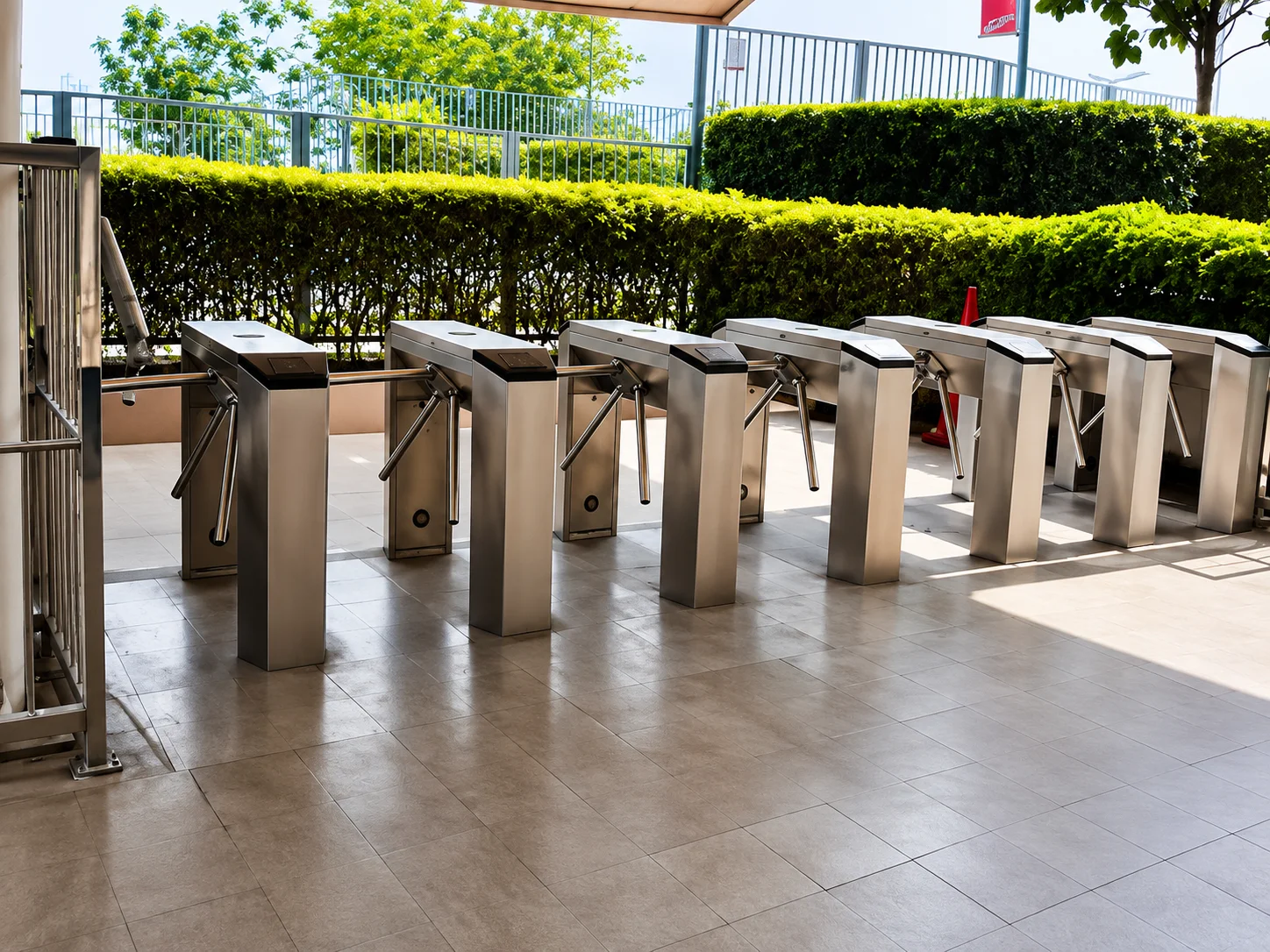
Morning shift changes, lunch-hour vehicle movement, and event days create bottlenecks at manually operated gates. Every person or vehicle waiting in line is time the business is losing, and it also increases pressure on guards to rush verification, which increases the error rate. Automated turnstiles capable of handling 30-35 persons per minute and boom barriers with 3-4 second opening times help maintain smooth pedestrian and vehicle flow while improving access control during peak operating hours.
4. Inconsistent Enforcement
A guard may know most regular employees by face and wave them through without checking credentials, which is efficient, but it also means unauthorized individuals can walk in if they look familiar or arrive with someone who is recognized. Automated systems don't make exceptions based on familiarity.
5. Higher Long-Term Staffing Cost
Round-the-clock manual coverage across multiple entry points needs multiple guards per shift, per gate. As a facility grows, more entry points, more shifts, more locations, staffing costs scale linearly. Automation doesn't remove the need for security personnel, but it reduces how many people are needed purely for entry verification.
What Changes With Entrance Automation
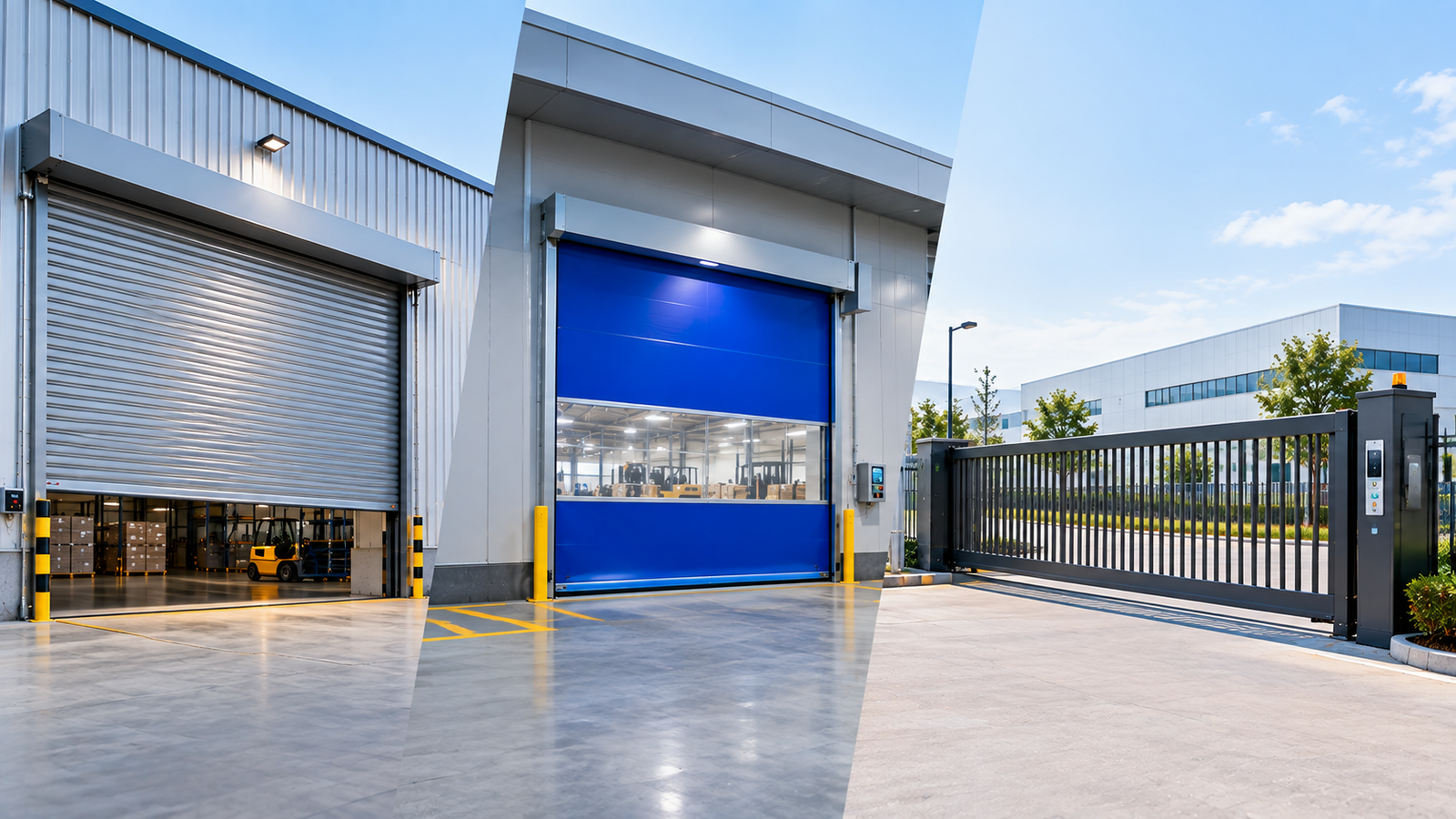
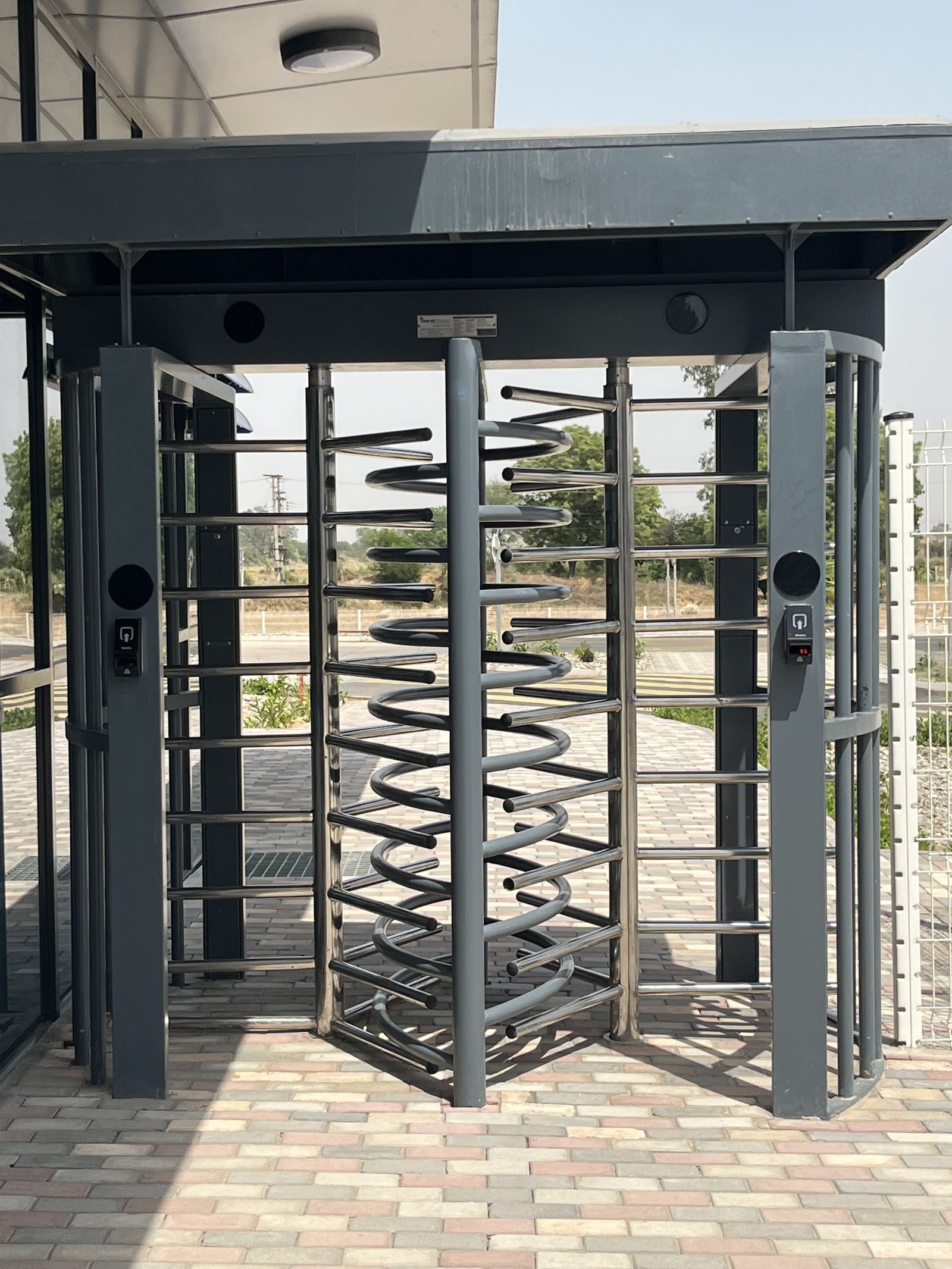
Modern entrance automation solutions are engineered for both performance and reliability. For example, turnstiles can process 30-35 persons per minute, are available in SS304/SS316 stainless steel, offer IP44/IP54 ingress protection, and support RFID, biometric, and access control integration with anti-tailgating and anti-passback features. For vehicle access, boom barriers provide 3-4 second opening times, support boom lengths of up to 7 metres, deliver 100% heavy-duty operation, and offer up to 5 million MTBF, making them suitable for high-traffic commercial and industrial facilities.
Verification happens the same way, every time, for every person. A credential is either valid or it isn't. There's no fatigue, no familiarity bias, no missed entry.
Every entry and exit is logged automatically, timestamped, and stored, creating a real audit trail that can be searched in seconds instead of reconstructed from memory or paperwork.
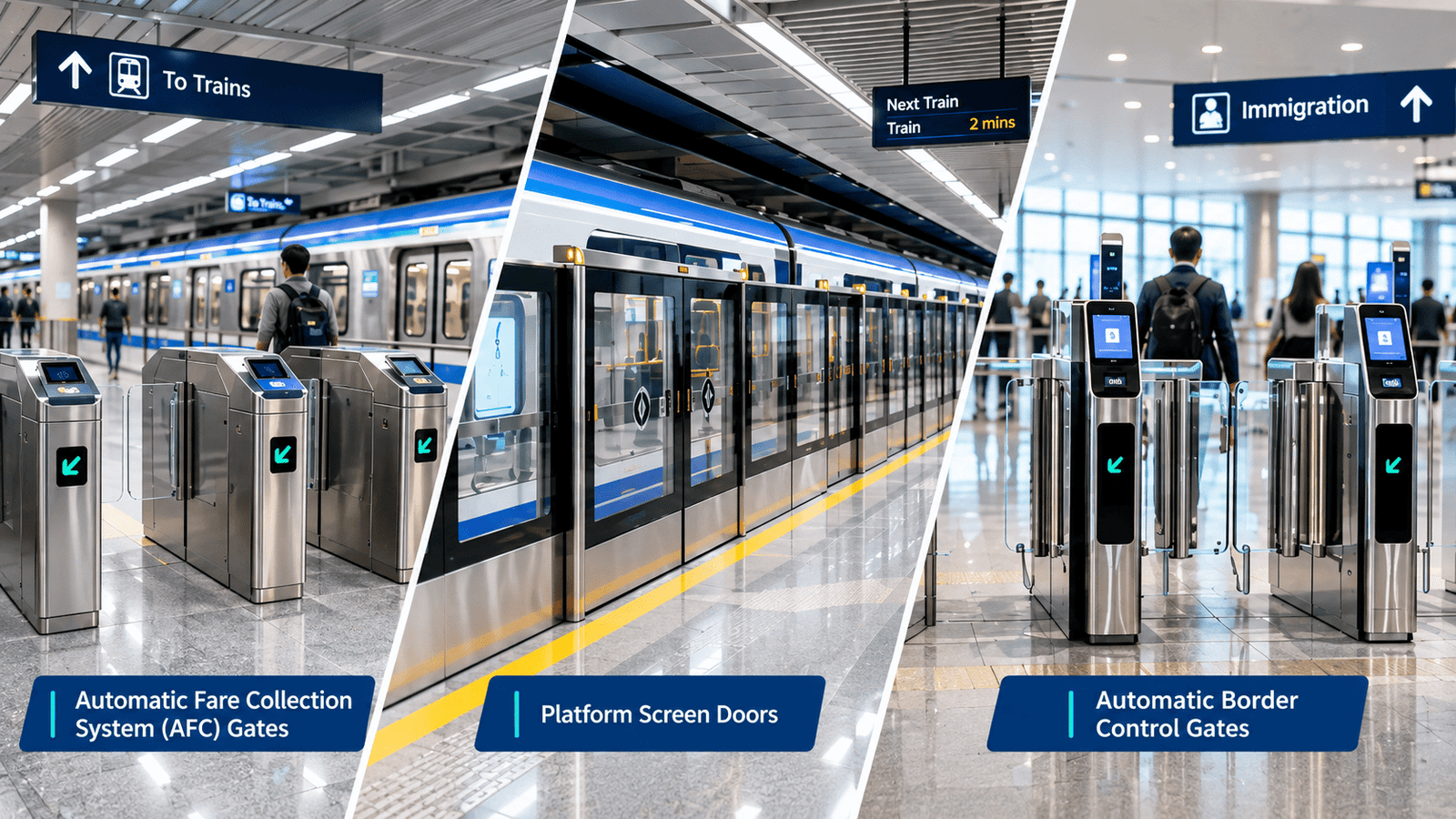
Multiple entry points can be managed from a single Access Control System India dashboard, so security teams see live activity across the entire facility instead of monitoring each gate separately.
Why This Shift Is Happening Now in India
A few factors are pushing this change faster than in previous years:
• Compliance requirements in manufacturing, healthcare, and logistics increasingly expect documented access records, not paper logs
• Rising real estate and staffing costs make round-the-clock manual coverage more expensive to justify
• Visitor and contractor volume has grown, especially in IT parks, business parks, and mixed-use commercial buildings
• Security incidents involving unauthorized access are increasingly traced back to manual verification gaps
• Facility managers are under more pressure to show measurable security performance, not just presence of guards
Does Automation Remove the Need for Security Staff?
No. and this is a common misunderstanding. Entrance automation doesn't eliminate security personnel; it changes what they're responsible for. Instead of manually checking every ID and writing every log entry, staff can focus on monitoring, responding to alerts, and handling exceptions, the parts of security that actually need human judgment. Aurotoshi (An Aurionpro Group Company) designs its entrance automation systems to work alongside existing security teams, not replace them.
Industries Making the Switch First
Certain sectors are moving faster than others because the cost of a manual security gap is higher for them:
• Manufacturing plants and factories, where unauthorized floor access is a safety issue, not just a security one
• Corporate offices and IT parks, with high daily visitor and vendor traffic
• Hospitals, where controlled access to sensitive wards is a compliance requirement
• Logistics and warehousing, where vehicle and goods movement needs a verifiable record
• Educational campuses, balancing open access for students with restricted zones for staff and infrastructure
How to Know If Your Facility Is Ready to Move
A facility is usually past the point where manual security is sustainable when:
• Entry queues regularly build up during peak hours
• Visitor or contractor volume has outgrown what a front desk register can track
• There's no reliable way to answer "who was on-site at this time" after an incident
• Guard staffing costs are increasing faster than the facility's headcount
• Multiple buildings or entry points are being managed without centralized visibility
If two or more of these apply, it's worth evaluating an Entrance Automation System India setup rather than adding more manual staff.
With over 30 years of experience, three manufacturing units, and strong OEM & ODM capabilities, Aurotoshi (An Aurionpro Group Company) helps organizations move from manual security to automated access control without disrupting day-to-day operations. As a trusted Entrance Automation Company India, Aurotoshi designs systems that integrate with existing security teams and infrastructure rather than requiring a complete overhaul.
Conclusion
Manual security isn't disappearing, but relying on it alone is becoming harder to justify as facilities grow, compliance expectations rise, and staffing costs increase. The businesses making the switch to entrance automation aren't doing it to remove people from security, they're doing it to close the gaps that manual processes can't reliably cover: consistent verification, accurate records, and faster entry at scale.
Aurotoshi (An Aurionpro Group Company) brings 30+ years of experience, three manufacturing units, and advanced OEM & ODM capabilities to help Indian businesses transition from manual checkpoints to reliable, integrated Entrance Automation System India and Access Control System India solutions.
Thinking About Moving Beyond Manual Security?
If entry queues, inconsistent verification, or missing audit records are becoming a problem at your facility, Aurotoshi (An Aurionpro Group Company) can help you evaluate what an automated setup would look like for your specific site. With 30+ years of experience, three manufacturing units, and strong OEM & ODM capabilities, our team designs solutions that work alongside your existing security staff, not around them.
Contact Aurotoshi today to discuss your facility's access control requirements.
Frequently Asked Questions
1. Is entrance automation better than manual security guards?
Entrance automation isn't a replacement for security guards, it's a tool that removes the inconsistency of manual verification while letting security staff focus on monitoring and response instead of routine checks.
2. Why are Indian businesses moving away from manual security registers?
Manual registers are hard to search, easy to lose, and don't provide a reliable audit trail. Entrance automation systems log every entry and exit automatically, making records accurate and easy to retrieve during audits or investigations.
3. Does entrance automation reduce the need for security staff?
It reduces the staff needed purely for entry verification, but most facilities still keep security personnel for monitoring, incident response, and handling exceptions that automated systems flag.
4. What are the biggest risks of relying only on manual security?
The biggest risks are human error during verification, inconsistent enforcement (especially with familiar faces), no searchable audit trail, and slower entry during peak hours, which creates congestion and pressure to rush checks.
5. How do I know if my facility needs to move to automated access control?
Signs include regular entry queues during peak hours, visitor volume that's outgrown manual tracking, no reliable way to check who was on-site during an incident, and rising guard staffing costs as the facility grows.
6. Can entrance automation work alongside existing security guards?
Yes. Entrance automation systems are typically installed to support existing security teams, automating routine verification and logging while staff focus on monitoring and handling exceptions. Aurotoshi (An Aurionpro Group Company) designs its Entrance Automation System India solutions specifically to integrate with a facility's current security setup.