Introduction
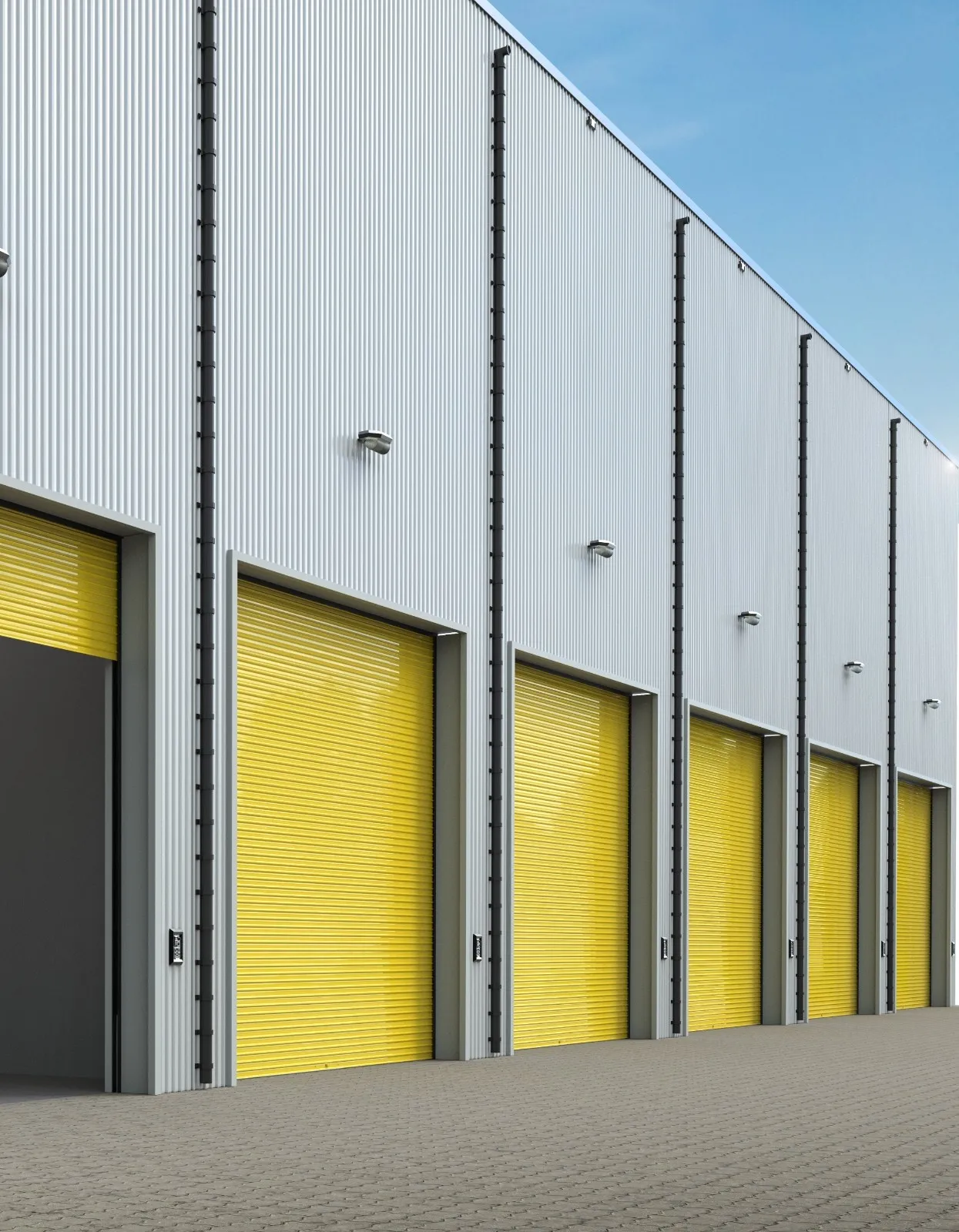
Walk through any warehouse, factory, or logistics hub in India and you'll find Industrial Rolling Shutters handling one of the most important access points in the building. They open and close throughout the day, help protect against weather and unauthorized entry, and support the movement of people, vehicles, and goods. Most of the time, they receive little attention unless something goes wrong.
That's actually the point. A well-built Industrial Rolling Shutter is supposed to be boring: reliable, low-maintenance, and rated to handle thousands of cycles without drama. The problem is that not every shutter on the market is built to that standard, and picking the wrong type for your opening, traffic volume, or compliance requirement is an expensive mistake to fix later.
This guide breaks down the actual types of industrial rolling shutters available, what each one is built for, and how to match a shutter to your facility instead of guessing.
Aurotoshi is a Make in India Industrial Rolling Shutters Manufacturer with CE-certified products built to IS 6248 and IS 3614:2021 standards. This guide draws on the specifications behind our own Rolling Shutters range, so the numbers here reflect what's actually installed in Indian facilities today, not generic claims.
What Is an Industrial Rolling Shutter?
An industrial rolling shutter is a curtain of interlocked horizontal laths that coils up and down over an opening, guided by side tracks and wound onto a barrel above the doorway. Unlike sectional or high-speed doors, rolling shutters need very little headroom, which is exactly why they're the default choice for openings where ceiling space is limited or the opening itself is unusually wide or tall.
The curtain, the drive mechanism, and the finish are where shutters actually differ from one another, and those differences are what determine whether a shutter holds up under daily industrial use or becomes a maintenance headache within a year.
Types of Industrial Rolling Shutters
1. Motorized Rolling Shutters, Indirect Drive
Built for large industrial openings and loading bays. The indirect-drive motor sits off to the side of the curtain rather than directly on the roller shaft, which gives it the torque to handle the widest, heaviest curtains: openings up to 10,000 mm in width and height. This is the variant most warehouses, automobile plants, and heavy manufacturing facilities install at their main vehicle and loading-bay entrances.
2. Motorized Rolling Shutters, Direct Drive
A compact motorized option where the drive sits directly on the roller shaft, saving space where headroom or side clearance is limited. It suits mid-sized openings in retail, commercial, and light manufacturing settings, and has fewer moving parts than an indirect drive, which generally means less maintenance over time.
3. Gear-Operated (Non-Motorized) Rolling Shutters
A manually operated shutter that doesn't need a power connection at all. It's the most economical option and the right fit for storerooms, service areas, and lower-traffic entrances where automation isn't necessary. Curtain options include MS, GI, and Galvalume.
4. 2-Hour Fire Rated Rolling Shutters
Certified for fire and smoke compartmentation, built to IS 3614:2021 in addition to the base IS 6248 standard. These are used at fire escape routes, compartment boundaries, and anywhere building codes require a certified fire barrier, common in pharma, food processing, malls, and public buildings. GI and Galvalume curtain options are available.
Comparing the Four Types
A side-by-side view of how the four variants stack up on the factors that actually affect day-to-day performance:
|
Type |
Best For |
Why Choose It |
Durability |
Maintenance |
|
Motorized, Indirect Drive |
Large industrial openings and loading bays |
Highest capacity for the widest, heaviest curtains |
Very high, built for heavy duty use |
Low, periodic motor and drive checks |
|
Motorized, Direct Drive |
Mid-sized openings with limited headroom |
Compact drive that fits where space is tight |
Highest, built for continuous use |
Lowest, fewer parts in a direct drive |
|
Gear-Operated (Non-Motorized) |
Lower-traffic areas without power access |
Dependable security with no power dependency |
Solid, ideal for moderate use |
Minimal, few moving parts |
|
2-Hour Fire Rated |
Fire escape routes and compartment boundaries |
Certified fire and smoke protection for compliance |
High, engineered to fire-safety standards |
Low, plus periodic compliance checks |
Curtain Materials: What They're Actually Made Of
The curtain is the part of the shutter doing the physical work, and it comes in a few material options depending on the variant:
• Galvanized Steel (GI): corrosion-resistant, widely used for general industrial applications
• Galvalume Steel: a zinc-aluminium coated steel with stronger long-term corrosion resistance than standard GI, suited to more exposed or humid sites
• Polycarbonate: used where some level of light transmission through the curtain is useful
• Mild Steel (MS): used in gear-operated variants where cost is the priority over corrosion resistance
Laths are available in 18-gauge or 20-gauge thickness, so the curtain strength can be matched to the opening size, wind exposure, and security requirement rather than over- or under-specifying it.
Technical Specifications That Actually Matter
When you're evaluating rolling shutters, from any manufacturer, not just Aurotoshi, these are the numbers worth checking, because they determine how the shutter performs over years of daily use, not just on installation day:
• Wind Load Rating: Aurotoshi shutters are rated up to 120 kmph, which matters for external openings exposed to weather
• Cycle Rating: 1 million+ cycles, meaning the drive and curtain mechanism are built for continuous daily opening and closing, not occasional use
• Standards Compliance: IS 6248 across all variants, with IS 3614:2021 additionally covering the fire-rated option
• Certification: CE certified
• Max Clear Opening: up to 10,000 mm width and height on the indirect-drive motorized variant, for facilities with unusually large openings
A shutter that can't meet these numbers isn't necessarily unsafe, but it likely wasn't engineered for continuous industrial-duty use, and the difference shows up in breakdown frequency a year or two after installation, not on the spec sheet at purchase time.
How to Choose the Right Industrial Rolling Shutter
1. Start With the Opening Size
Wide loading-bay doors or unusually tall openings generally need the indirect-drive motorized variant, which is built to handle up to 10,000 mm in both width and height. Standard mid-sized openings are well served by a direct-drive motorized shutter.
2. Factor In Traffic Volume
An opening used dozens of times a day, such as a loading bay or a busy internal corridor, needs a motorized shutter rated for continuous-duty cycles. A storeroom or low-traffic service entrance can run economically on a gear-operated manual shutter without any real downside.
3. Check Whether Fire Rating Is Required
If the opening sits along a fire escape route or a compartment boundary as defined by your building's fire safety plan, a certified 2-hour fire-rated shutter isn't optional, it's a compliance requirement, and it needs to carry a real IS 3614:2021 certification, not just a manufacturer's claim of "fire resistant."
4. Match the Curtain Material to the Environment
Galvalume outperforms standard GI in humid, coastal, or heavily exposed sites. Where curtain strength against forced entry or wind load is the priority, thicker 18-gauge laths are the better choice over 20-gauge.
5. Consider Power Availability and Automation Needs
Motorized shutters need a reliable power connection and generally integrate better with access control or automated facility systems. Where power access is inconsistent or automation isn't a priority, gear-operated shutters remove that dependency entirely.
6. How to Choose the Right Industrial Rolling Shutters Manufacturers in India
A rolling shutter is only as reliable as the standards it's certified against and the support available after installation. When evaluating Industrial Rolling Shutters Manufacturers in India, look for IS 6248 compliance as a baseline, CE certification, and a manufacturer that offers structured AMC and spare parts availability in India, not just support at the point of sale.
Applications Across Industries
Industrial rolling shutters are used across a wide range of facility types, each with different priorities:
• Warehousing and logistics: high-traffic loading bays needing motorized, heavy-duty variants
• Automobile and heavy manufacturing: wide openings for vehicle and equipment movement
• Pharmaceutical and food and beverage facilities: fire-rated shutters for compliance, often alongside hygiene-focused fittings
• Retail and commercial buildings: direct-drive motorized shutters where space is limited
• Data centres: security-focused shutters for restricted access points
• Storage units and service trades: economical gear-operated shutters for lower-traffic entrances
Aurotoshi (An Aurionpro Group Company) supplies Rolling Shutters across all of these environments, backed by CE certification, IS 6248 and IS 3614:2021 compliance, and 24/7 AMC support with spare parts dispatched from our Ghaziabad facility, not imported on a delay.
Why This Matters for Facility Managers and Procurement Teams
A rolling shutter failure isn't just an inconvenience: a stuck loading-bay shutter halts vehicle movement, a failed fire-rated shutter is a compliance violation, and a shutter that can't handle its rated cycle count starts breaking down well before its expected service life. Choosing the right type upfront, backed by real IS and CE certification rather than generic claims, is what prevents these problems from showing up later as unplanned downtime.
Conclusion
Industrial rolling shutters aren't a one-size-fits-all product. The right choice depends on your opening size, daily traffic, whether fire compliance applies, and the environment the shutter has to hold up in, humid, dusty, high-wind, or otherwise. Matching the shutter type to these factors upfront is what determines whether it becomes a dependable, low-maintenance part of your facility or a recurring maintenance problem.
Aurotoshi is a Make in India Industrial Rolling Shutters Manufacturer offering motorized indirect-drive, motorized direct-drive, gear-operated, and 2-hour fire-rated variants, all CE certified and built to IS 6248 and IS 3614:2021 standards, with 1 million+ cycle ratings and wind load resistance up to 120 kmph.
Looking for a Reliable Industrial Rolling Shutters Manufacturer in India?
Aurotoshi (An Aurionpro Group Company) manufactures a complete range of Industrial Rolling Shutters, motorized, gear-operated, and certified fire-rated, engineered for Indian operating conditions and backed by structured AMC support. Explore our full Rolling Shutters range to see specifications, models, and case studies, or get in touch for a quote tailored to your facility.
Contact Aurotoshi today to discuss your rolling shutter requirements.
Frequently Asked Questions
1. What is an industrial rolling shutter used for?
Industrial rolling shutters secure warehouse, factory, and commercial openings while allowing smooth movement of people, vehicles, and goods. They're used at loading bays, main entrances, internal openings, and fire escape routes.
2. What is the difference between motorized and gear-operated rolling shutters?
Motorized shutters use an electric drive (indirect or direct) for automated operation and suit high-traffic or larger openings. Gear-operated shutters are manually operated, need no power connection, and are a more economical choice for lower-traffic areas.
3. What materials are industrial rolling shutter curtains made of?
Common curtain materials include Galvanized Steel (GI), Galvalume Steel, Polycarbonate, and Mild Steel (MS), typically available in 18-gauge or 20-gauge lath thickness depending on the strength and budget required.
4. What is a fire-rated rolling shutter, and when is it required?
A fire-rated rolling shutter is certified to contain fire and smoke for a specified period, commonly 2 hours, and is required along fire escape routes and compartment boundaries as defined by a building's fire safety plan. Look for certification to IS 3614:2021, not just a general fire-resistance claim.
5. What wind load can industrial rolling shutters withstand?
Quality industrial rolling shutters, such as Aurotoshi's range, are engineered to withstand wind loads up to 120 kmph, which is an important factor for shutters installed at external, weather-exposed openings.
6. What is the maximum size for an industrial rolling shutter?
Motorized indirect-drive rolling shutters can cover openings up to 10,000 mm in both width and height, making them suitable for the largest industrial loading bays and warehouse entrances.
7. How many operating cycles should an industrial rolling shutter be rated for?
Look for a cycle rating of at least 1 million cycles for continuous industrial-duty use. A lower cycle rating generally indicates the shutter is built for lighter or occasional use rather than daily industrial traffic.
8. How do I choose a reliable Industrial Rolling Shutters Manufacturer in India?
Check for IS 6248 compliance as a baseline standard, CE certification, a documented cycle and wind load rating, fire-rated options certified to IS 3614:2021 where needed, and a manufacturer offering structured AMC and locally available spare parts rather than import-dependent support.