Introduction
Workplace security is usually judged by what doesn't happen, no unauthorized entry, no safety incident, no compliance flag during an audit. But that outcome depends entirely on what's happening at the entry point, which is exactly where most facilities are still weakest. A guard can be alert and still miss something. A visitor register can be filled out and still be useless during an actual investigation.
An Entrance Automation System India setup addresses this at the source: it controls who gets in, records exactly when and how, and gives security teams visibility they don't get from manual checkpoints alone. This guide walks through exactly how that works, section by section, so you know what's actually improving, not just that it "sounds more secure."
Aurotoshi (An Aurionpro Group Company) has built entrance automation and access control systems for Indian businesses for over 30 years. With three manufacturing units and strong OEM & ODM capabilities, Aurotoshi's systems are behind a large share of the automated entry points already operating across Indian facilities today.
Manual Security vs Entrance Automation: A Quick Comparison
|
Feature |
Manual Security |
Entrance Automation |
|
Identity Verification |
Manual ID verification by guards |
RFID, Biometric, QR, Face & Iris authentication |
|
Pedestrian Access |
Manual supervision |
Turnstiles, Flap Barriers & Swing Barriers handling 30–35 persons/minute |
|
Vehicle Entry |
Manual gate checking |
Boom Barriers with 3–4 second opening time |
|
Audit Trail |
Paper registers |
Automatic digital logs with timestamps |
|
Tailgating Prevention |
Difficult to monitor |
Anti-Tailgating & Anti-Passback technology |
|
Monitoring |
Separate guards |
Centralized dashboard with real-time monitoring |
|
Compliance |
Manual records |
Searchable digital audit trail |
1. Consistent Identity Verification at Every Entry
The core security improvement is simple: automated systems verify the same way, every time. Whether it's an RFID card, a fingerprint, a facial scan, or a mobile credential, the system checks it against an authorized list before granting access, with no fatigue, no shortcuts, and no exceptions made for familiar faces.
This matters more than it sounds. A large share of unauthorized entry incidents in manually guarded facilities happen because someone was recognized and waved through without an actual credential check.
Modern entrance automation strengthens identity verification by integrating RFID, biometric, QR code, facial recognition, and iris authentication with centralized access control systems. Instead of relying on manual verification, every entry is authenticated using predefined permissions, creating a consistent, secure, and traceable access process across the facility.
2. Restricted Zone Control
Not every part of a facility needs the same level of access. Entrance automation lets organizations set different permission levels for different zones, so a delivery contractor might access the loading dock but not the server room, and a general employee might access common areas but not a restricted lab or data centre.
This kind of zoning is difficult to enforce manually and consistently at scale, but straightforward with an integrated Access Control System India setup.
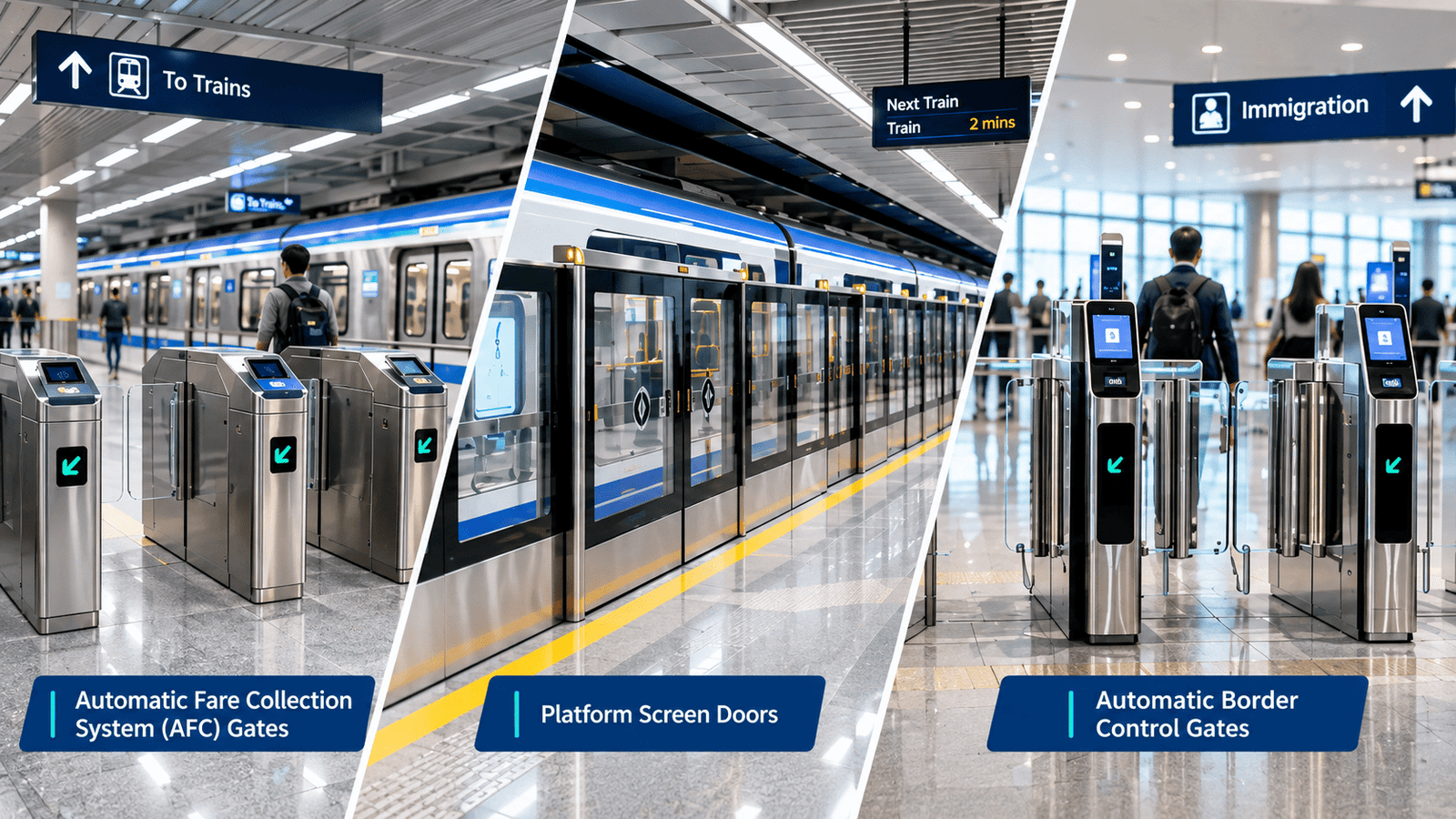
Facilities requiring wider and more accessible entry points can benefit from Swing Barriers and P-Gates, which offer 550 mm and 900 mm passage options for employees, visitors, wheelchair users, and service personnel. Their smooth, controlled movement helps maintain security without affecting accessibility in corporate offices, hospitals, airports, and commercial buildings.
3. Digital Audit Trails for Every Movement
Every authenticated entry and exit is automatically recorded with timestamps, creating searchable digital records that simplify compliance reporting, visitor tracking, and incident investigations. This eliminates manual logbooks while providing complete visibility across multiple entry points.
Instead of searching through paper registers or relying on manual reports, security teams can quickly retrieve historical access records, identify unusual activity, and generate reports whenever required. This improves accountability while reducing administrative effort during audits and compliance reviews.
4. Faster, Safer Vehicle Access
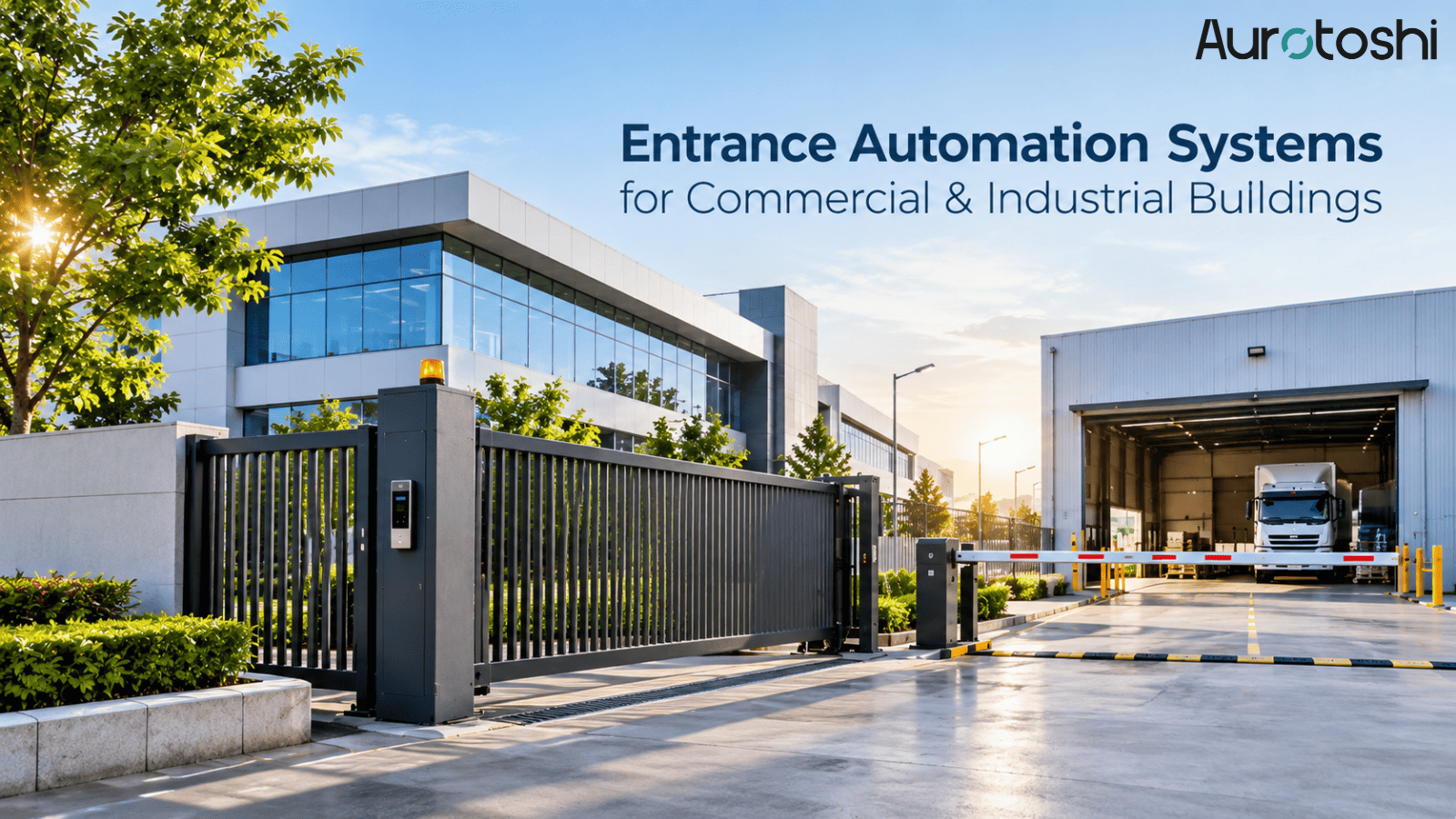
Automated Boom Barriers help maintain smooth vehicle movement while strengthening perimeter security. With opening speeds as fast as 3-4 seconds and boom lengths of up to 7 metres, they are well suited for factories, warehouses, commercial campuses, and high-traffic facilities. Their heavy-duty design supports continuous operation, helping organizations reduce vehicle queues while maintaining secure access.
5. Centralized Monitoring Across Multiple Entry Points
Larger facilities often have multiple gates, doors, and access points, each historically managed independently. Entrance automation connects them into a single dashboard, so security teams can monitor every entry point from one place instead of relying on separate guards reporting separately.
This centralization is what makes it possible to spot patterns, like repeated failed access attempts at one gate, that would go unnoticed if each entry point were monitored in isolation.
6. Reduced Tailgating and Piggybacking Risk
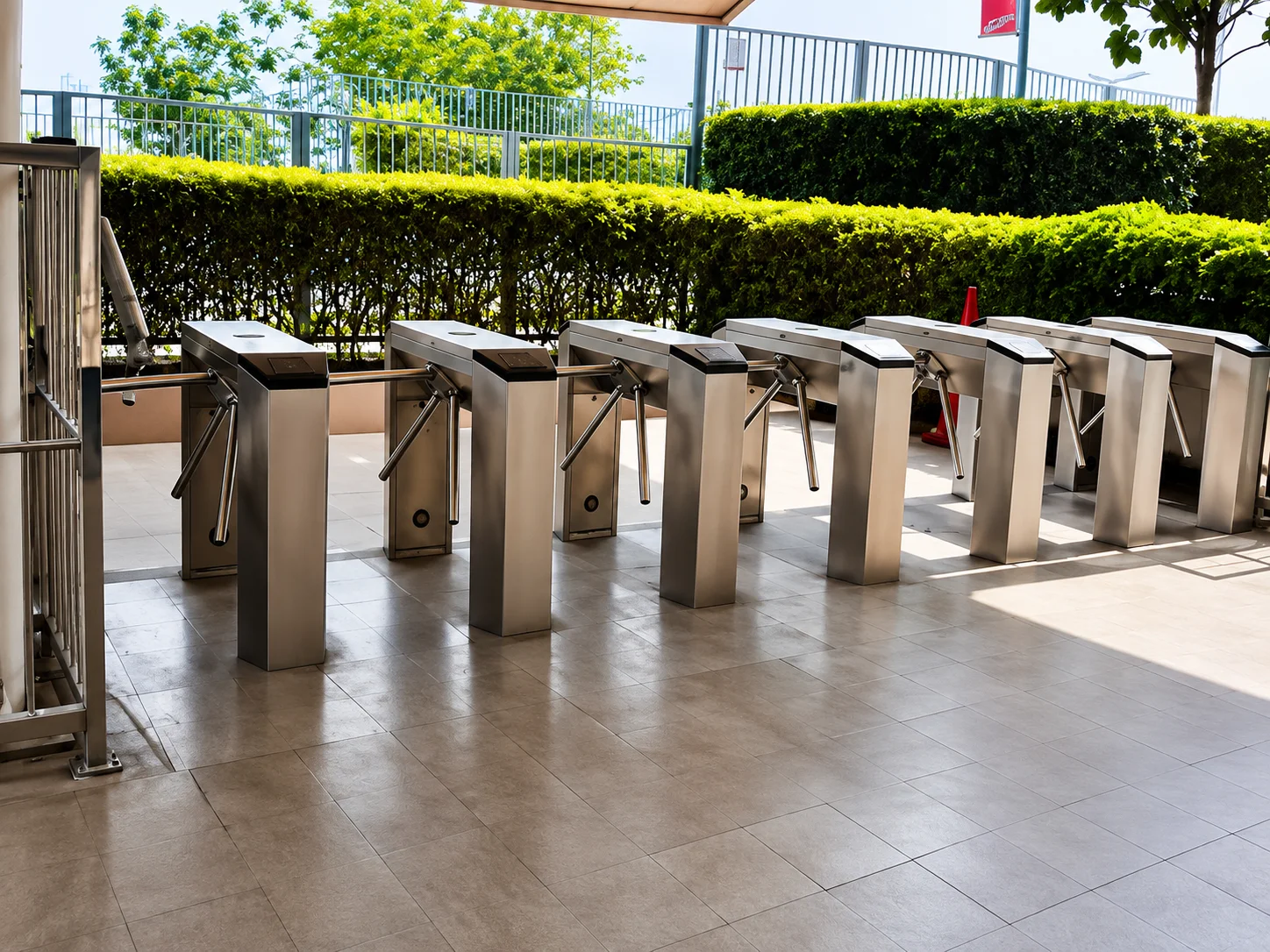
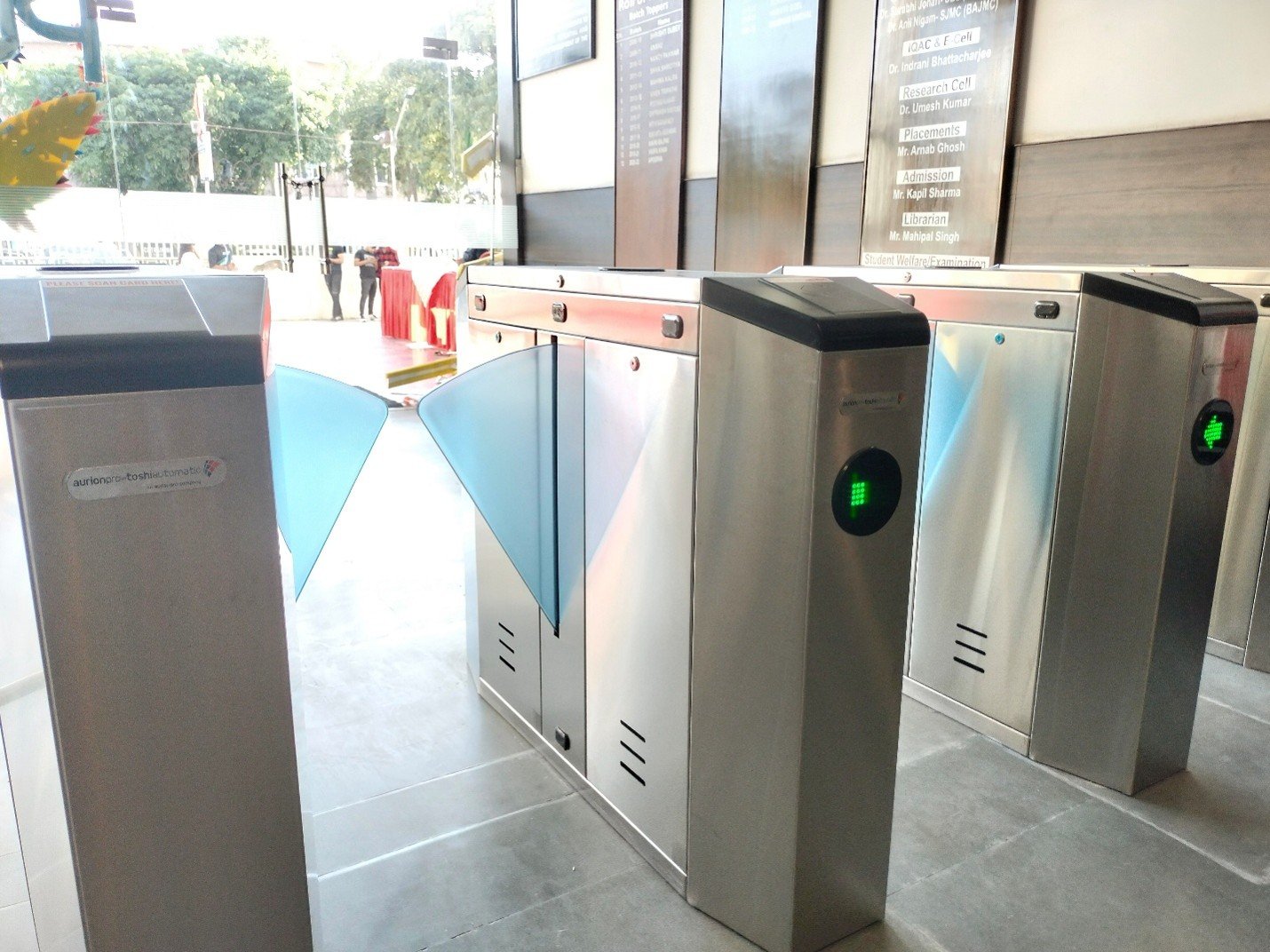
Tailgating (an unauthorized person following an authorized one through a gate) is one of the hardest risks to control manually. Turnstiles and flap barriers used in entrance automation systems are specifically designed to allow one verified person through at a time, closing a gap that guards alone often can't fully manage, especially during high-traffic periods.
Unlike manual monitoring, Turnstiles and Flap Barriers are equipped with anti-tailgating, anti-passback, and infrared sensor technology that allows only one authorized person to pass at a time. This significantly reduces unauthorized entry attempts and strengthens security at controlled access points.
7. Integration With Existing Security Infrastructure
Entrance automation isn't a standalone system, it works alongside CCTV, alarm systems, visitor management software, and building management platforms. When access control is connected to CCTV, for example, a denied entry attempt can automatically trigger a camera alert, giving security teams real-time context instead of a delayed report.
8. Better Visitor and Contractor Management
Unregistered or poorly tracked visitors are a common point of failure in workplace security. Automated visitor management lets organizations pre-register expected visitors, verify them on arrival, and grant time-limited access, reducing the chance of someone remaining on-site longer than authorized or accessing areas outside their permission.
Where accessibility is equally important, Swing Barriers and P-Gates provide wider lanes for visitors carrying luggage, delivery personnel, and wheelchair users. Their controlled opening mechanism helps organizations maintain secure access while offering a more convenient entry experience for authorized visitors.
9. Consistency During Shift Changes and Peak Hours
Manual security is most vulnerable during shift changes, lunch hours, and high-traffic periods, when guards are stretched thin or distracted. Automated systems don't lose consistency under load, the same verification standard applies whether it's one person entering or fifty.
10. Data That Supports Better Security Decisions
Beyond day-to-day access control, the data collected by an entrance automation system, entry patterns, peak traffic times, repeated access denials, gives facility and security managers information they can actually act on, rather than relying on guard reports or assumptions about where the risks are.
How This Fits Into a Broader Security Strategy
Entrance automation isn't a replacement for CCTV, alarm systems, or trained security personnel, it's the layer that makes those other systems more effective by controlling and recording what happens at the point of entry. A facility with strong cameras but weak entry verification still has a gap; a facility with strong entry verification and no monitoring still has one too. The strongest setups combine both.
With over 30 years of experience, three manufacturing units, and strong OEM & ODM capabilities, Aurotoshi (An Aurionpro Group Company) designs Entrance Automation System India solutions that integrate directly with a facility's existing security infrastructure - CCTV, alarms, visitor management, and building management systems, rather than operating as an isolated add-on.
Industries Where This Matters Most
• Manufacturing plants, where restricted-zone control is a safety requirement, not just a security preference
• Corporate offices and IT parks, managing daily employee, visitor, and vendor traffic
• Hospitals, where access to sensitive wards and pharmacies needs to be documented
• Warehouses and logistics hubs, tracking vehicle and goods movement
• Educational institutions, balancing open campus access with restricted staff and infrastructure zones
• Residential communities and commercial complexes, managing high visitor and vehicle volume daily
As a trusted Entrance Automation Company India, Aurotoshi (An Aurionpro Group Company) has delivered customized entrance automation and Access Control System India solutions across these industries, backed by three manufacturing units and comprehensive OEM & ODM capabilities.
Conclusion
Workplace security improves when the entry point stops being the weakest link. Entrance automation doesn't just speed up how people get in, it standardizes verification, creates a searchable record of every entry, restricts access by zone, and connects with the rest of a facility's security infrastructure so nothing is being monitored in isolation.
Aurotoshi (An Aurionpro Group Company) brings 30+ years of experience, three manufacturing units, and advanced OEM & ODM capabilities to help Indian businesses build entrance automation systems that genuinely strengthen workplace security, not just add technology for its own sake.
Want to Strengthen Security at Your Facility?
Aurotoshi (An Aurionpro Group Company) can help you evaluate where your current entry points are creating security gaps and design an Entrance Automation System India setup that closes them. With 30+ years of experience, three manufacturing units, and strong OEM & ODM capabilities, our team builds solutions that integrate with your existing security infrastructure.
Contact Aurotoshi today to discuss your workplace security requirements.
Frequently Asked Questions
1. How does entrance automation improve workplace security?
It standardizes identity verification at every entry, creates a digital audit trail of all movement, restricts access by zone, reduces tailgating risk, and integrates with CCTV and alarm systems for real-time monitoring.
2. Can entrance automation prevent unauthorized access completely?
No system eliminates risk entirely, but entrance automation significantly reduces unauthorized access by removing the human error and inconsistency involved in manual verification, and by logging every entry attempt for review.
3. Does entrance automation work with existing CCTV and alarm systems?
Yes. Modern entrance automation systems are designed to integrate with CCTV, alarm systems, visitor management software, and building management platforms for centralized, real-time security monitoring.
4. What is tailgating, and how does entrance automation prevent it?
Tailgating is when an unauthorized person follows an authorized person through a secured entry point. Turnstiles and flap barriers used in entrance automation are designed to allow only one verified person through at a time, reducing this risk.
5. Is entrance automation only useful for large facilities?
No. While large facilities see the biggest operational benefit due to entry volume, even mid-sized offices, clinics, and warehouses benefit from consistent verification, audit trails, and reduced dependency on manual checks.
6. How does entrance automation help with compliance and audits?
Entrance automation systems automatically log every entry and exit with timestamps, creating a searchable digital record that supports internal audits, compliance reviews, and incident investigations without relying on manual paperwork.