Modern buildings need more than a conventional entrance. Factories, warehouses, offices, logistics facilities and commercial properties often handle a constant movement of people, vehicles and materials throughout the day. Managing that movement efficiently requires the right combination of access, safety and automation. This is where choosing the right Entrance Automation Company in India can make a difference.
An entrance automation system can include automated gates, high-speed doors, rolling shutters, pedestrian access systems and other automated entry solutions, depending on the building and its operational requirements.
For a manufacturing facility, the priority may be fast movement of forklifts and goods. A corporate building may need controlled pedestrian access, while a warehouse may require a high-speed door to reduce the time an opening remains exposed.
The important point is that there is no single entrance automation solution for every application. The system should be selected according to the opening, traffic frequency, security requirements, environment and day-to-day operating conditions.
What Is an Entrance Automation System?
An entrance automation system uses electrically or electronically operated equipment to control the movement of people, vehicles or materials through an entrance.
Depending on the application, the system may include:
• Automatic entrance gates
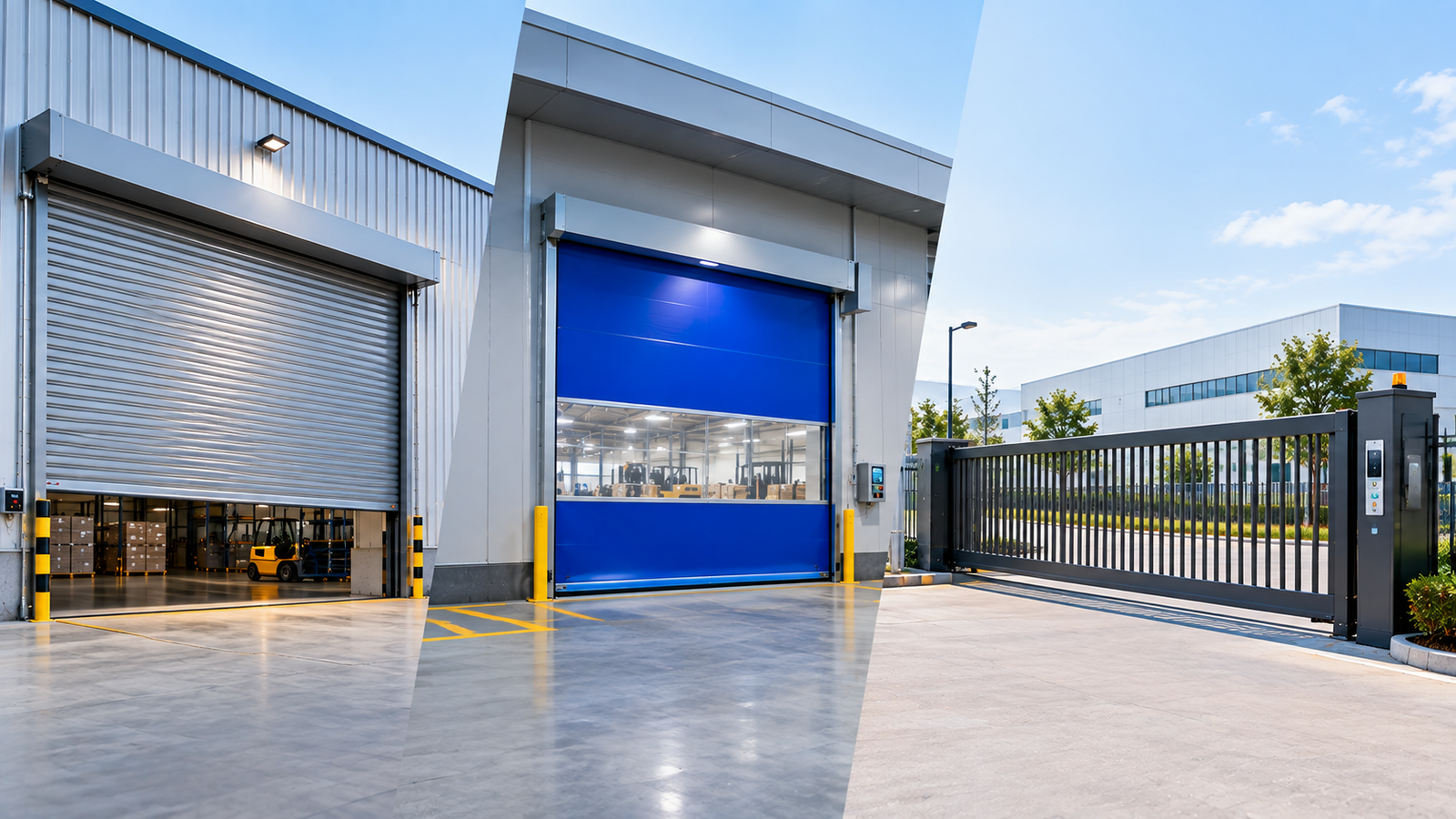
• High-speed doors
• Industrial rolling shutters
• Automatic pedestrian doors
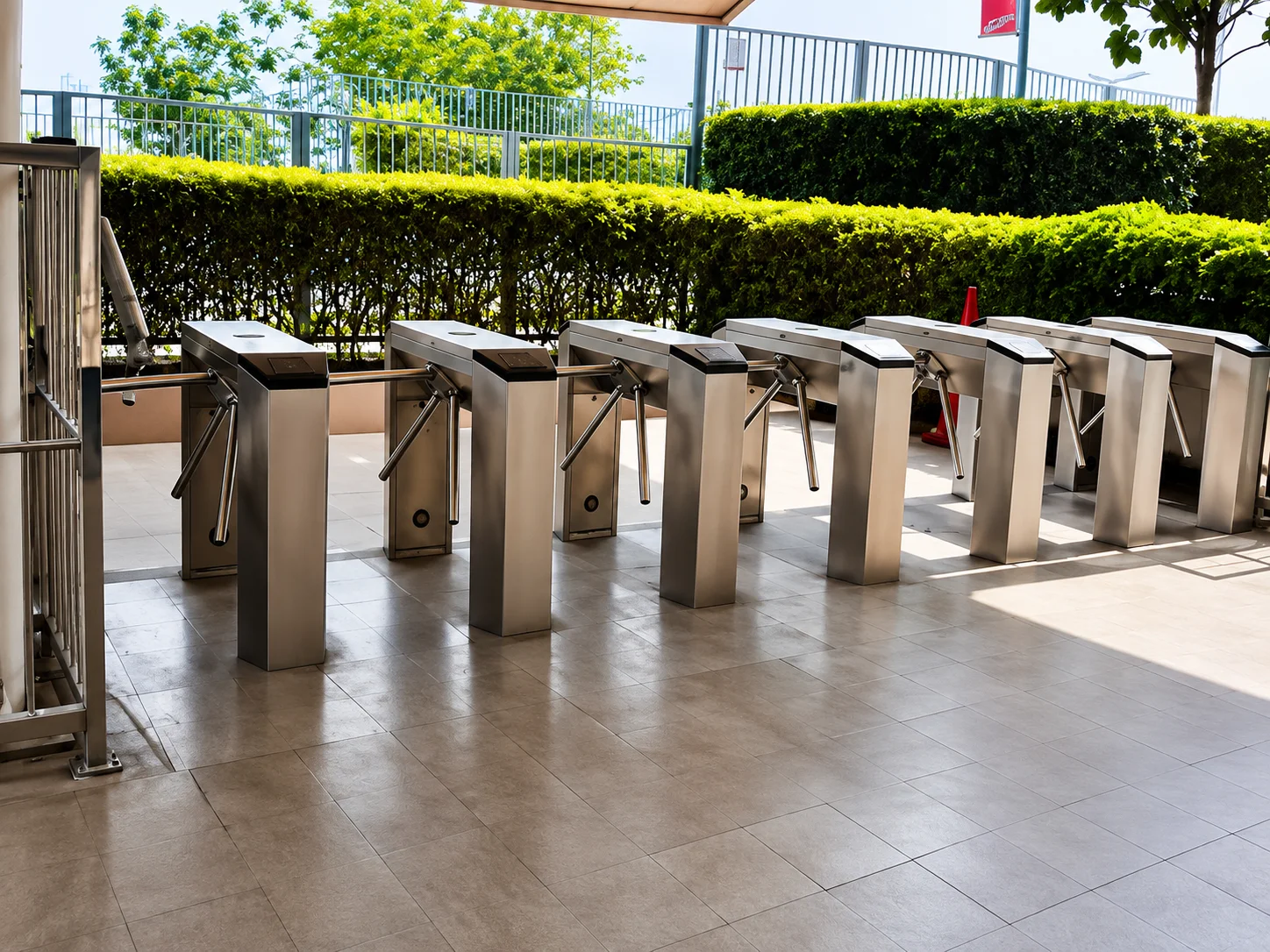
• Turnstiles and pedestrian access systems
• Vehicle access barriers
• Access-control integration
These systems can be used independently or as part of a larger access and facility management solution.
For example, a factory may use an automated gate at the main vehicle entrance, a high-speed door between production areas and a rolling shutter at a large industrial opening.
This approach allows each entrance to be designed around its actual purpose rather than using the same type of door or gate throughout the facility.
Why Are Entrance Automation Systems Important for Indian Buildings?
Indian commercial and industrial facilities can have very different operating conditions. A warehouse may experience continuous vehicle and forklift movement, while an office building may have heavy pedestrian traffic during specific hours.
Manual entrances can become inefficient when traffic volumes increase.
An appropriately designed automation system can help organisations manage these entry points more consistently while supporting security, safety and operational efficiency.
1. Better Control Over Movement
Automated entrances can regulate who or what passes through a particular entry point.
Vehicle gates can control site access, while pedestrian systems can help manage employee or visitor movement.
2. Faster Movement
In facilities with frequent movement, waiting for manual doors or gates to be opened can interrupt operations.
Automation reduces unnecessary manual intervention and can help maintain a smoother flow of people, vehicles and materials.
3. Improved Security
Entrance automation can be integrated with access-control technologies where required. This allows organisations to control access to restricted areas and reduce unauthorised entry.
4. Improved Workplace Safety
Automated systems can incorporate sensors and safety mechanisms appropriate to the equipment and application.
The exact safety features required depend on the type of entrance, operating environment and applicable standards.
5. Better Operational Efficiency
In industrial environments, entrance performance can directly affect internal logistics.
For example, a high-speed door between two operational areas can reduce the time an opening remains open while allowing frequent movement of personnel and equipment.
Types of Entrance Automation Systems Used in India
Different buildings require different entrance solutions. The following systems are commonly considered for commercial, industrial and infrastructure applications.
1. Automatic Entrance Gates
Automatic gates are designed to control vehicle or pedestrian entry into a property.
Depending on the site layout, requirements may include sliding, telescopic, cantilever, swing or retractable configurations, each suited to different space and ground conditions. Aurotoshi's published gate range, for example, supports gate weights from 500 kg up to 6,000 kg, clear openings up to 50 metres for a single-leaf sliding gate and up to 75 metres for a telescopic configuration, and is built to EN 13241-1 with EN 12453 photocell safety.
They are commonly used at:
• Industrial facilities
• Factories
• Warehouses
• Commercial properties
• Corporate campuses
• Institutional facilities
• Parking and vehicle entry points
When selecting an automatic gate, factors such as available space, gate dimensions, traffic frequency, security requirements and operating conditions should be evaluated.
For larger industrial and commercial requirements, working with an experienced Entrance Gate Manufacturer in India can help ensure that the gate configuration and automation system are matched to the application.
2. High Speed Doors
High-speed doors are designed for openings where rapid movement is important.
They are particularly useful in:
• Manufacturing facilities
• Warehouses
• Logistics centres
• Distribution facilities
• Food and pharmaceutical environments
• Controlled production areas
Unlike conventional doors that may remain open for longer periods during frequent movement, high-speed doors are designed for rapid opening and closing, with Aurotoshi's range offering opening speeds up to 2 metres per second and duty cycles up to 2,000 operations per day, built to EN 13241-1, EN 12453 and EN 12978.
This can help reduce unnecessary exposure between different areas and support smoother internal traffic.
When selecting a High Speed Door Manufacturer in India, businesses should consider opening dimensions, operating cycles, environmental conditions, safety requirements and the type of traffic passing through the opening.
3. Industrial Rolling Shutters
Industrial rolling shutters are suitable for larger openings where security, durability and controlled access are important.
They can be used in:
• Factories
• Warehouses
• Workshops
• Industrial buildings
• Commercial facilities
• Loading and service areas
Different shutter constructions and operating mechanisms can be selected depending on the required application. Aurotoshi's rolling shutter range, for example, is rated for wind loads up to 120 kmph and cycle ratings of 1 million or above, built to IS 6248, with a certified fire-rated option available where compliance requires it.
For industrial sites, the shutter should be selected based on factors such as opening size, frequency of operation, wind exposure, security requirements and the environment in which it will operate.
4. Pedestrian Entrance Automation
Not every entrance is designed for vehicles or industrial equipment.
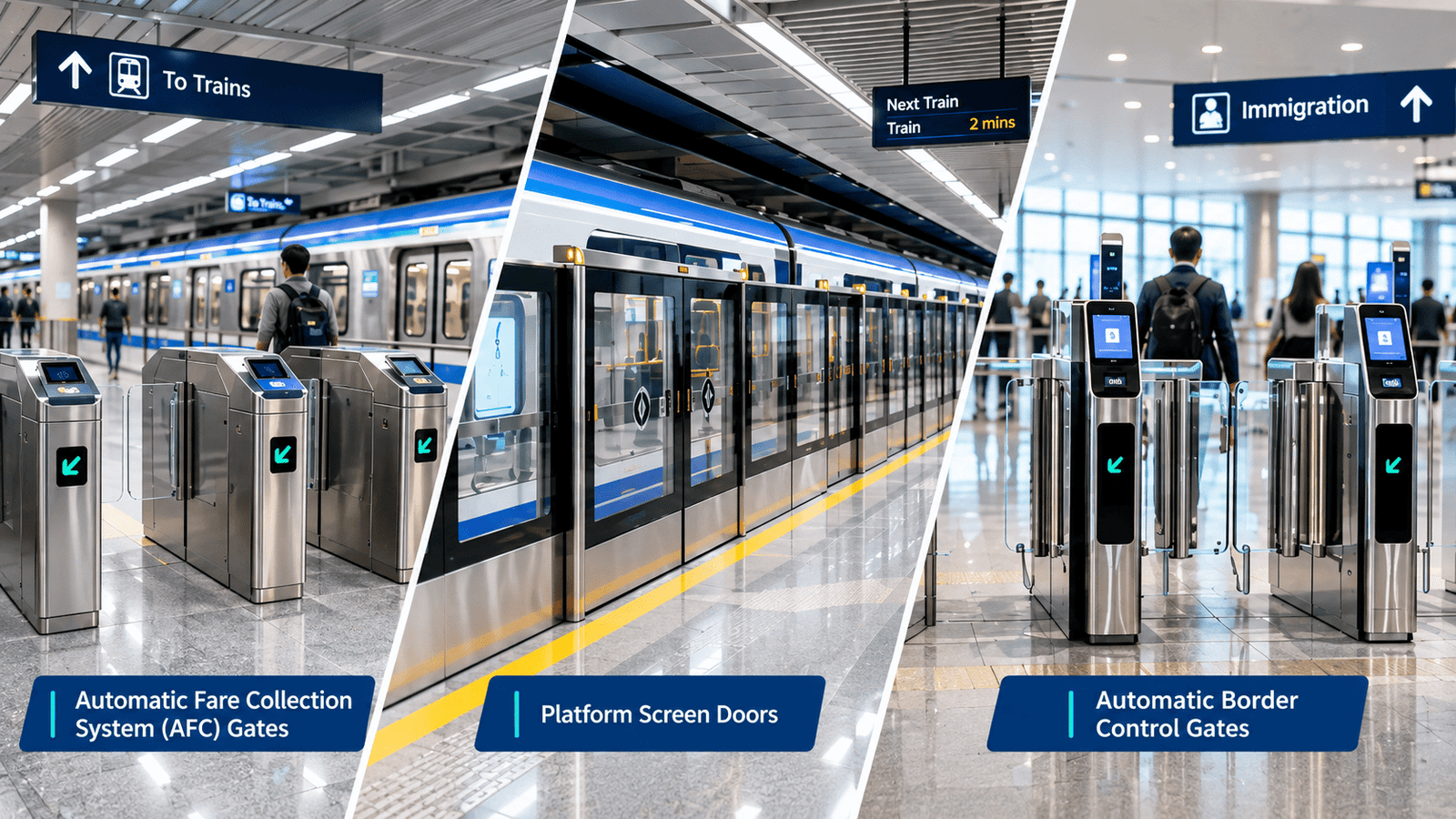
Commercial buildings, offices, transportation facilities and public infrastructure may require automated pedestrian access systems.
These can include systems such as:
• Automatic pedestrian gates
• Turnstiles
• Flap barriers
• Swing barriers
• Full-height turnstiles
• Mantrap systems
The appropriate solution depends on the required level of access control, pedestrian volume, security requirements and available space.
For high-traffic environments, the objective is not simply to automate the entrance but to manage pedestrian movement without creating unnecessary queues or compromising security.
5. Vehicle Access Automation
Industrial and commercial properties often have dedicated vehicle entrances.
Depending on the site, vehicle access automation may include automated gates, barriers and related access-control systems.
The system can be selected based on:
• Vehicle volume
• Vehicle type
• Entry and exit frequency
• Available space
• Security requirements
• Integration with access-control systems
A well-planned vehicle entrance can help separate pedestrian and vehicle movement, improving overall site organisation.
Entrance Automation for Commercial Buildings
Commercial buildings have different entrance requirements from industrial facilities.
An office, shopping centre, corporate campus or commercial complex may have thousands of people moving through its entrances during a normal working day.
The system therefore needs to balance security, convenience, pedestrian flow and reliability, rather than optimising for any one of these at the expense of the others.
For example, a commercial building may use automatic pedestrian entrances for the main lobby while using controlled gates for vehicle access.
Where access control is required, automation can also be integrated with technologies such as card readers, biometric systems or other authorised-access systems.
The right combination depends on the building's layout and security policy.
Entrance Automation for Industrial Facilities
Industrial facilities usually have more complex movement patterns.
People, forklifts, trucks, raw materials and finished products may all use different entrances.
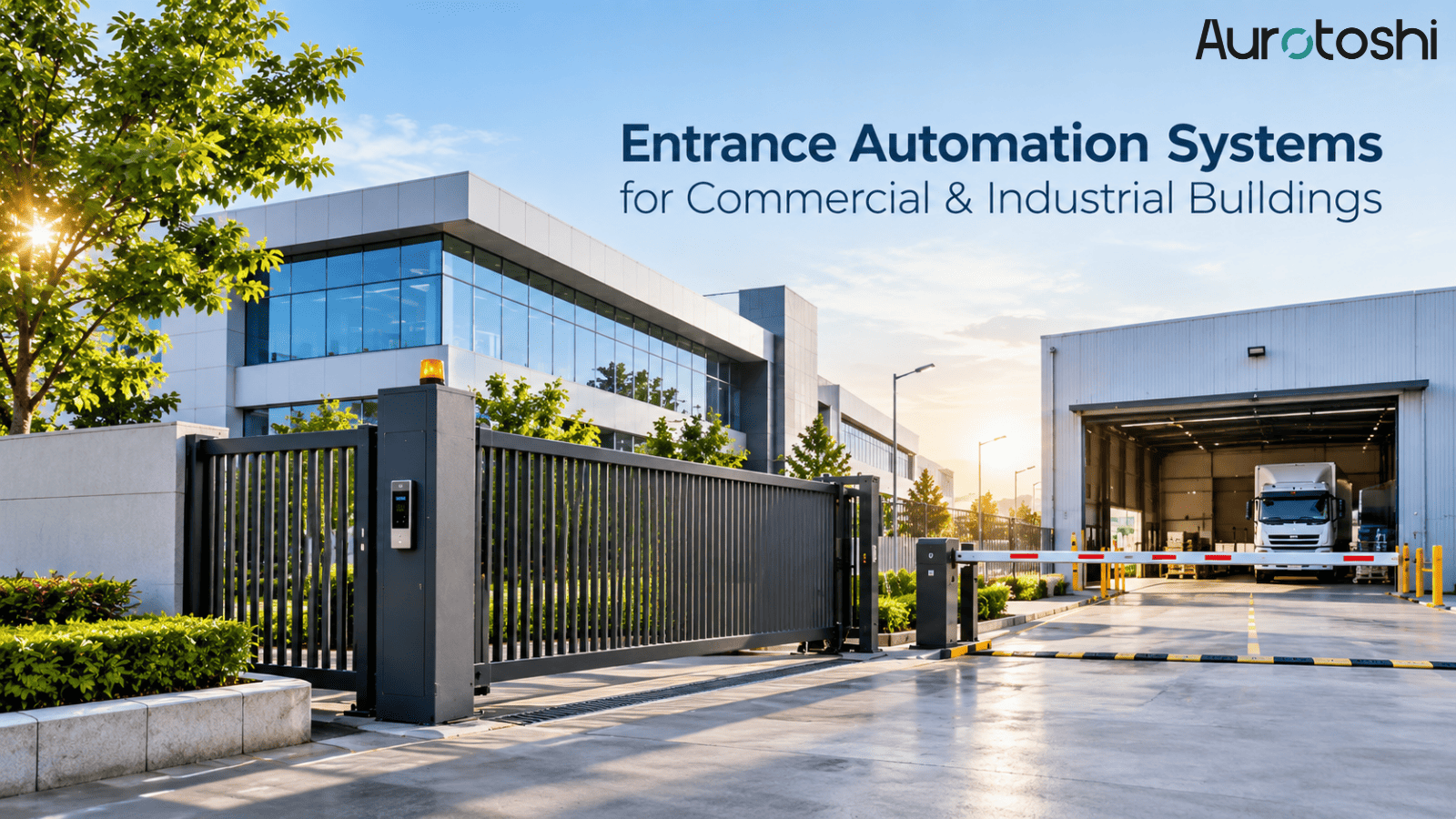
A single facility could therefore require multiple types of automation. For example, a main vehicle entrance typically uses an automated gate, a production area typically uses a high-speed door, a large warehouse opening typically uses an industrial rolling shutter, and an employee entrance typically uses a pedestrian access system.
Aurotoshi's Samsung Electronics India project illustrates this approach in practice: high-speed doors, motorized telescopic sliding gates, dock levellers and tripod turnstiles were combined as part of a single building-envelope solution for a high-volume manufacturing facility, rather than one product type being used throughout the site.
This illustrates why an Entrance Automation System India solution should be planned around the facility rather than selected purely on the basis of the equipment name.
The entrance needs to support the actual movement taking place through it.
Entrance Automation for Warehouses and Logistics Facilities
Warehouses and logistics centres depend heavily on efficient movement.
Every unnecessary delay at an entrance can affect internal material handling and vehicle movement.
High-speed doors can be considered for frequently used internal or external openings, while automated gates can manage vehicle movement at the site perimeter.
Rolling shutters may be suitable for larger warehouse openings where controlled access and physical protection are required.
Aurotoshi's Hindustan Unilever distribution centre project is one example of this at scale: 269 installations were completed across two distribution centres in four months, supporting facilities handling approximately 700 to 800 truck movements daily without disrupting ongoing operations.
The system should be selected after evaluating:
• Forklift movement
• Truck movement
• Opening dimensions
• Frequency of operation
• Indoor and outdoor conditions
• Security requirements
• Required operating speed
How to Choose the Right Entrance Automation System
Choosing an entrance automation system should begin with the application rather than the product.
1. Identify What Moves Through the Entrance
Is the entrance primarily used by:
• Pedestrians?
• Cars?
• Trucks?
• Forklifts?
• Material-handling equipment?
The answer will influence the type of automation required: pedestrian-only entrances point toward turnstiles or automatic doors, while vehicle and forklift traffic points toward gates, high-speed doors or rolling shutters instead.
2. Measure the Opening
Opening width and height are important when determining suitable equipment.
Large industrial openings may require completely different solutions from standard pedestrian entrances.
3. Consider Traffic Frequency
An entrance used a few times a day has different requirements from one operating hundreds or thousands of times.
Cycle frequency should therefore be considered before selecting the equipment, since a low-cycle product installed on a high-traffic opening will wear out and fail well ahead of its expected service life.
4. Evaluate the Environment
Temperature, dust, humidity, wind exposure, cleanliness requirements and other site conditions can influence equipment selection.
5. Consider Safety Requirements
Safety features should be appropriate to the equipment and its operating environment.
6. Plan for Integration
If the facility already uses access control, security systems or other building-management technologies, integration requirements should be considered at the planning stage.
7. Consider Installation and After-Sales Support
Entrance automation is a long-term operational system. Availability of installation, maintenance, service and replacement components should therefore be part of the purchasing decision.
Why Professional System Selection Matters
Entrance automation is not simply about installing a motorised gate or automatic door.
The system has to work with the physical opening, traffic pattern and operating environment.
An incorrectly selected system may result in unnecessary maintenance, reduced operating efficiency or poor user experience.
A professional entrance automation company can evaluate the application, recommend the appropriate system and account for installation and operational requirements. Aurotoshi brings more than 30 years of manufacturing experience across three manufacturing units to this kind of application assessment, rather than offering a single standard product regardless of site conditions.
For industrial and commercial projects, this approach is particularly important because entrance equipment often forms part of a larger security, logistics and facility-management system.
Entrance Automation and the Future of Building Access in India
As commercial and industrial facilities become more focused on security, efficiency and controlled movement, automated entrance solutions are becoming an important part of building infrastructure.
The trend is not simply towards replacing manual gates and doors with automated versions.
The larger shift is towards integrated entrance management where gates, doors, access control and traffic-management systems work together according to the needs of the facility.
For businesses planning a new facility or upgrading an existing one, the best starting point is to identify how people, vehicles and materials move through the site.
From there, the entrance automation system can be designed around those requirements.
Frequently Asked Questions
What is an entrance automation system?
An entrance automation system uses automated equipment to control the movement of people, vehicles or materials through a building or facility entrance. Depending on the application, it can include automatic gates, high-speed doors, rolling shutters, turnstiles, barriers and pedestrian access systems.
What are the different types of entrance automation systems?
Common types include automatic entrance gates, high-speed doors, industrial rolling shutters, automatic pedestrian doors, turnstiles, flap barriers, swing barriers and vehicle access barriers. The right system depends on the type of entrance and its operating requirements.
Where are entrance automation systems used?
Entrance automation systems are used in factories, warehouses, logistics centres, offices, commercial buildings, corporate campuses, infrastructure projects and other facilities where controlled movement of people, vehicles or materials is required.
How does entrance automation improve security?
Automated entrances can help control access and can be integrated with access-control technologies where required. This allows authorised users to enter designated areas while helping restrict unauthorised access.
What should I consider before choosing an entrance automation system?
Important considerations include the opening size, type and frequency of traffic, security requirements, operating environment, required speed, safety requirements, available space and integration with existing access-control systems.
Are high-speed doors part of entrance automation?
Yes. High-speed doors are one type of automated entrance solution, particularly useful for industrial and commercial openings where frequent movement requires rapid opening and closing.
What is the difference between an automatic gate and a high-speed door?
An automatic gate is generally used to control access through a vehicle or perimeter entrance, while a high-speed door is commonly used for rapid movement between indoor or controlled areas. The correct choice depends on the application and traffic requirements.
Which entrance automation system is best for a factory?
There is no single system that is best for every factory. A facility may require a combination of automated gates, high-speed doors, rolling shutters and pedestrian access systems depending on vehicle movement, production areas, warehouse openings and security requirements.
How do I choose an entrance automation company in India?
Look for a company that can understand the application, recommend suitable equipment, provide appropriate technical specifications and support installation and after-sales requirements. For industrial projects, experience with similar applications is also an important consideration.
Can entrance automation systems be customised?
Yes. Many industrial and commercial entrance systems need to be selected or configured according to opening dimensions, traffic frequency, operating environment, security requirements and other site conditions.
Are entrance automation systems suitable for warehouses?
Yes. Warehouses can use automated gates, high-speed doors, rolling shutters and other access systems depending on vehicle movement, forklift traffic, loading operations and security requirements.
Conclusion
The right entrance can make a significant difference to how efficiently a commercial or industrial facility operates.
From automated gates at the property entrance to high-speed doors inside a warehouse or rolling shutters at large industrial openings, each system has a specific role.
The objective should not simply be to automate an entrance. It should be to select a system that supports security, safety, traffic flow and day-to-day operational efficiency.
For businesses evaluating an Entrance Automation System India solution, the best approach is to start with the site's actual requirements and then select the equipment around those needs.
Aurotoshi provides entrance automation and industrial access solutions for different commercial and industrial applications, backed by more than 30 years of manufacturing experience and project delivery including the Samsung Electronics India and Hindustan Unilever installations, helping businesses evaluate the appropriate solution for their facility.