Public transportation systems need reliable ways to manage ticketing, validate fares and move passengers through stations efficiently. As metro networks, railway systems and urban transit infrastructure expand, traditional ticketing methods can become challenging to manage during peak travel hours.
An Automatic Fare Collection (AFC) system helps address these challenges by automating ticket purchase, fare validation and passenger entry and exit. It brings together technologies such as AFC gates, ticket vending machines, smart cards, QR codes, digital payments and central ticketing software to support a more convenient travel experience.
AFC systems are widely used in metro rail networks and other mass transit environments to streamline passenger movement, support fare management and reduce dependence on manual processes. For transportation operators, the right system can also improve operational visibility and simplify ticketing activities.
This guide explains what an Automatic Fare Collection system is, how it works, its main components, different ticketing technologies, key benefits and the factors to consider when selecting an AFC solution.
What Is an Automatic Fare Collection (AFC) System?
An Automatic Fare Collection (AFC) system is an integrated technology solution that automates fare-related activities in public transportation. These activities may include ticket issuance, payment processing, ticket validation, passenger access control and transaction recording.
Instead of relying entirely on manual ticket counters and physical ticket checks, an AFC system allows passengers to use approved travel credentials, such as contactless smart cards, QR-code tickets or compatible bank cards, depending on the network's configuration.
For example, in a metro station, a passenger may purchase a ticket from a ticket vending machine, scan the QR code at an AFC gate and enter the paid area once the ticket is validated.
An AFC system typically combines physical equipment, payment and ticketing technology, communication infrastructure and software. These components work together to help transit operators manage passenger access and fare collection.
How Does an Automatic Fare Collection System Work?
The exact process depends on the transport network, payment methods and ticketing architecture. However, a typical AFC system follows a series of connected steps.
1. Ticket Purchase or Travel Credential Issuance
Passengers obtain a travel credential through a ticket counter, ticket vending machine, mobile application or another supported channel.
2. Fare Payment
The passenger completes the required payment using an available method. Depending on the system, this could involve cash, a bank card, a contactless payment method or a supported digital payment option.
3. Ticket Validation at the AFC Gate
At the station entrance, the passenger presents the ticket or travel credential to the relevant reader. The gate communicates with the applicable validation system to determine whether access should be authorized.
4. Controlled Passenger Entry
When the credential is accepted, the AFC gate opens or releases its barrier to allow the passenger to pass through. Sensors monitor movement through the lane and help detect situations such as unauthorized passage or tailgating.
If the credential is invalid or access is not authorized, the gate remains closed or follows its configured response.
5. Journey and Transaction Recording
The system records relevant ticketing and access events. Depending on the fare collection architecture, entry and exit information may be used to calculate fares, verify journeys, reconcile transactions or update travel entitlements.
6. Central Monitoring and Reporting
A central management or back-office platform may collect information from ticket vending machines, gates, payment systems and other connected equipment.
This information can help operators monitor equipment status, review transactions, identify operational issues and manage the wider transportation ticketing system.
What Are the Main Components of an AFC System?
An AFC system is not a single machine. It is a combination of hardware and software designed to support different stages of the passenger journey.
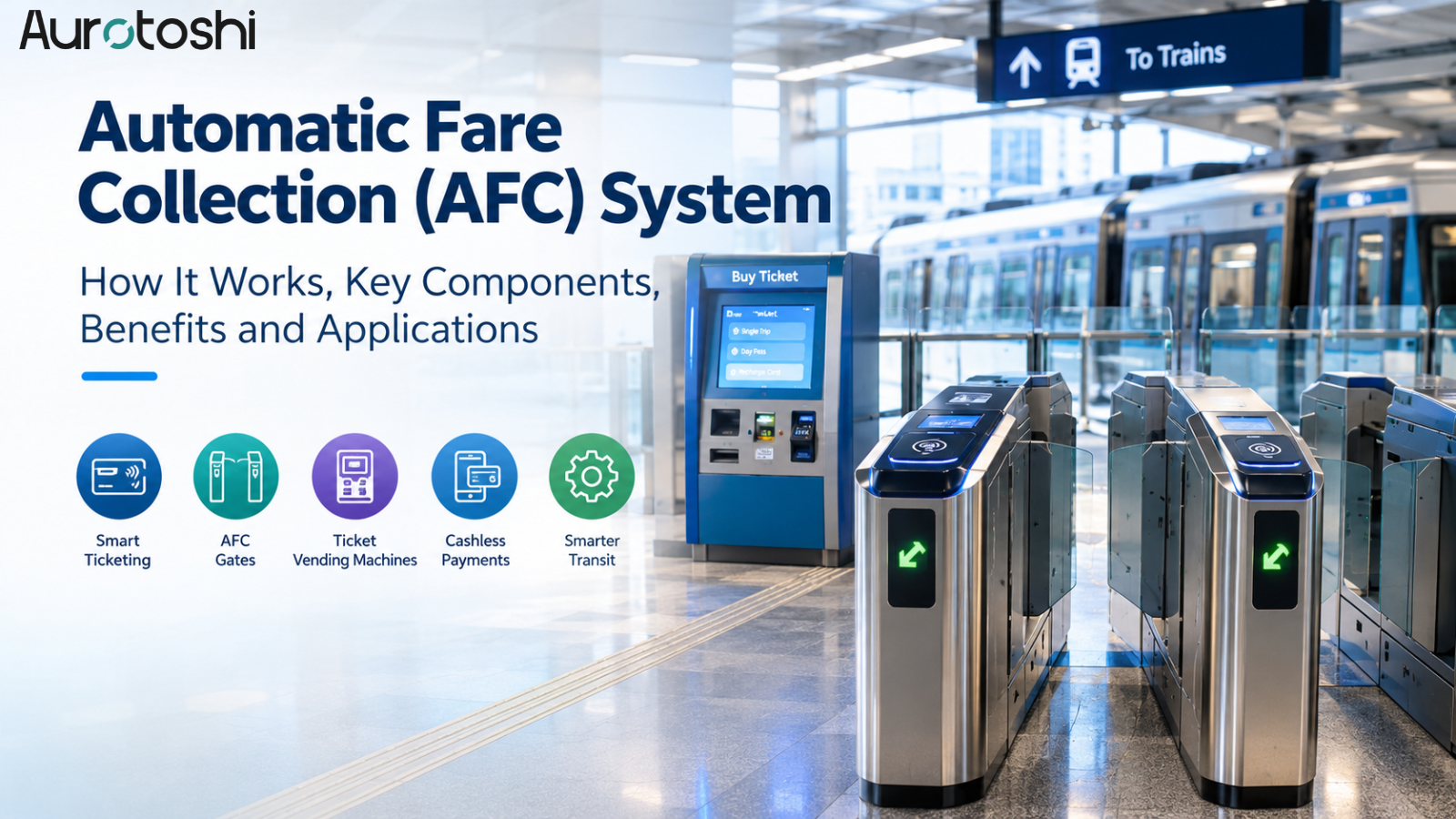
1. Automatic Fare Collection Gates
Automatic Fare Collection gates regulate passenger entry and exit at metro and railway stations through designated lanes.
Common configurations include swing-flap gates and retractable-flap gates. The appropriate design depends on passenger volume, available space, accessibility requirements and station layout.
AFC gates work as part of the wider fare collection infrastructure. Aurotoshi's Automatic Fare Collection Gates are designed for passenger access applications in mass transit environments.
For reference, Aurotoshi's specified AFC configuration is available in flap and swing versions and supports 40 to 45 persons per minute with an opening and closing time of less than 0.5 second. It uses 16 pairs of IR sensors for passage detection and supports CSC, EMV and paper QR ticket media.
2. Ticket Vending Machines (TVMs)
Ticket vending machines allow passengers to purchase tickets or complete supported ticketing transactions without depending entirely on staffed counters. Depending on the model and configuration, a TVM may support cash, coins, bank cards, QR-based payments, smart-card recharge and ticket printing.
These machines are commonly used in metro stations, railway stations, bus terminals and other public transportation facilities. By providing self-service ticketing, they can help passengers complete transactions independently and reduce pressure on ticket counters.
3. Cashless Ticket Vending Machines
Cashless ticket vending machines enable passengers to complete supported ticketing transactions using electronic payment methods. Depending on the system, these may include contactless bank cards, NFC-based payments and QR-related payment options.
For transit operators, cashless ticketing can reduce dependence on physical cash handling while giving passengers additional ways to purchase tickets. The available payment methods depend on the machine configuration and the payment infrastructure integrated into the AFC system.
Aurotoshi's Cashless Ticket Vending Machines address self-service ticketing requirements for cashless transit applications.
4. Ticket Readers and Validation Devices
Ticket readers read the travel credential presented by a passenger. Depending on the system, they may read QR codes, contactless smart cards, tokens or compatible bank cards.
Read speed and reliability are important in busy stations where many passengers pass through access points within a short period.
5. Central Computer and Back-Office Software
The central system coordinates fare rules, ticketing data, transaction records and equipment monitoring, according to the overall system design.
It may also support reporting, revenue reconciliation, device configuration, fault monitoring and operational analysis. These functions help operators manage the ticketing infrastructure and review its performance.
6. Communication and Integration Infrastructure
Communication links allow connected equipment to exchange information with central systems and other relevant platforms.
Depending on the project, the infrastructure may include wired or wireless connectivity, network equipment, payment interfaces and integrations with existing transit management systems.
Reliable communication and properly defined interfaces are important for smooth operation, particularly when equipment across multiple stations needs to work together.
What Are the Different Types of Automatic Fare Collection Systems?
AFC systems can be designed around different ticketing media and payment methods. Many modern networks combine more than one approach to accommodate different passenger needs.
Contactless Smart Card Systems
Passengers use a compatible contactless card or travel pass at a reader to validate access or travel entitlement. Stored-value cards and subscription-based passes may be supported, depending on the fare system.
These systems can be convenient for regular commuters who prefer not to purchase a separate ticket for every journey.
QR-Code Ticketing Systems
Passengers present a printed or digital QR code to a compatible reader.
QR ticketing can support paper-based and digital ticketing channels, depending on the implementation. It can also provide passengers with an alternative to physical travel cards.
EMV and Contactless Bank Card Systems
Compatible bank cards and payment-enabled devices can be used in transit systems configured to accept these payment methods.
The system must support the relevant payment infrastructure and fare-processing arrangements. Not every AFC installation automatically supports open-loop bank-card payments.
Token-Based Ticketing Systems
Some transportation networks use physical tokens or other reusable or single-use credentials. The AFC equipment validates the token according to the rules established by the operator.
The suitability of token-based ticketing depends on the network's operational requirements, fare policies and existing infrastructure.
Integrated Digital Ticketing Systems
Integrated ticketing platforms may connect ticket vending machines, AFC gates, mobile ticketing channels, smart cards and central fare management software.
The objective is to provide a consistent ticketing process across the available passenger channels and connected equipment. The level of integration depends on the system architecture and the transport operator's requirements.
What Is the Difference Between an AFC System and an AFC Gate?
An AFC system refers to the broader fare collection infrastructure, while an AFC gate is one of its physical access-control components.
|
Feature |
AFC System |
AFC Gate |
|
Main Purpose |
Manages fare collection and ticketing activities |
Controls passenger entry and exit |
|
Components |
May include software, payment systems, TVMs, readers and gates |
Gate mechanism, sensors, readers and control electronics |
|
Ticketing |
Coordinates validation and related fare processes |
Reads or receives authorization for passenger passage |
|
Monitoring |
Can provide system-wide transaction and equipment information |
Reports gate status and access events when integrated |
|
Scope |
Covers the wider fare collection process |
Covers a particular passenger access lane |
What Are the Benefits of an Automatic Fare Collection System?
1. Faster Passenger Processing
Controlled access and automated processing can help passengers move through stations more efficiently. Properly designed gate layouts can reduce bottlenecks, particularly when passenger volumes increase during peak hours.
Actual throughput depends on the gate configuration, station design, ticketing process and passenger behaviour.
2. Reduced Dependence on Manual Ticketing
Self-service ticket vending machines allow passengers to complete supported transactions independently. This can reduce pressure on staffed ticket counters and give operators more flexibility in allocating staff.
3. Multiple Ticketing and Payment Options
An AFC system can support different ticketing media, such as smart cards, QR tickets, tokens and compatible bank cards. The available options depend on the equipment and payment infrastructure selected for the project.
4. Better Control Over Passenger Access
AFC gates help restrict access to authorized passengers and monitor movement through designated lanes. Sensor-based detection and configured anti-tailgating functions can help reduce unauthorized passage.
These measures support access management but do not eliminate every form of fare evasion.
5. Improved Transaction Visibility
Integrated ticketing software can help operators review transaction records, equipment status and operational reports.
This information can support revenue reconciliation, issue investigation and better oversight of the ticketing process.
6. Support for Digital Transit Initiatives
AFC infrastructure can provide a foundation for digital ticketing and cashless payment initiatives. Depending on the implementation, operators may introduce additional payment channels or integrate new ticketing technologies over time.
7. More Convenient Passenger Journeys
When ticket purchase, validation and entry work together smoothly, passengers can spend less time waiting at counters or resolving avoidable ticketing issues.
Where Are Automatic Fare Collection Systems Used?
AFC systems are primarily associated with public transportation and other environments that require controlled passenger access linked to ticketing or payment.
Metro Rail Networks
Metro stations use AFC gates and ticketing equipment to manage entry into paid areas. Automated fare collection is particularly relevant to networks that handle large passenger volumes throughout the day.
Railway Stations
Suburban and other railway networks may use automated ticketing and validation equipment to support passenger movement and reduce reliance on manual checks.
The system configuration depends on the railway operator's fare structure, station layout and ticketing requirements.
Bus Rapid Transit Systems
Bus Rapid Transit (BRT) and other high-capacity bus networks may implement automated fare collection to manage passenger access and support their selected ticketing methods.
Multimodal Transportation Hubs
Large transit hubs may bring together different transport services and ticketing channels. Integrated systems can help coordinate ticketing processes across participating services when the underlying infrastructure supports it.
Other Controlled-Access Transit Facilities
Selected transportation facilities may use automated ticketing and access equipment where controlled entry, passenger processing and transaction tracking are required.
What Should You Consider When Choosing an AFC System?
Selecting an AFC solution requires more than comparing gate prices or the number of supported payment methods. The equipment and software must suit the operational requirements of the transportation network.
Passenger Volume and Throughput
Estimate normal and peak passenger volumes before selecting gate configurations. The design should account for expected passenger flow, the number of lanes, entry and exit arrangements and available station space.
A first estimate of lane count comes from dividing peak-hour demand by the per-lane throughput of the chosen gate, then adjusting for the entry and exit split and for how passengers actually queue at the lanes.
Ticketing and Payment Compatibility
Confirm which ticket formats, smart cards, QR codes and payment methods the system must support. If the project uses an existing fare collection platform, establish compatibility and integration requirements before finalizing the equipment.
If the network plans open-loop payments such as NCMC, confirm reader and software support at the specification stage rather than treating it as a later upgrade, because it affects the reader hardware, the back-office software and the payment interfaces together.
Safety and Accessibility
Review passenger detection, emergency operating modes, accessible passage widths and the requirements for passengers with reduced mobility. Emergency procedures and gate behaviour should align with the relevant project and safety requirements.
Integration With Existing Infrastructure
Check how the gates and ticket vending machines will communicate with central software, payment services, station systems and other connected equipment.
Define interface requirements and testing responsibilities early to reduce integration problems during commissioning.
Typical integration points to define include gate-to-reader communication, ticket vending machine reporting to the back-office software, payment gateway and bank interfaces, clearing and settlement with the central system, and links to station and control-room systems. Each interface should have a named owner, a written specification and an acceptance test before installation.
Reliability and Maintenance
Transit equipment may be used repeatedly throughout the day. Review operating-cycle requirements, service access, availability of spare parts, maintenance procedures and technical support arrangements.
Monitoring and Reporting
Determine what information the operator needs to monitor equipment status, investigate faults and review transactions. Confirm which reporting and diagnostic functions are included in the proposed configuration.
Scalability and Future Requirements
Consider whether the system can accommodate additional lanes, stations, payment methods or software integrations as the network develops. Expansion should be assessed against the design and compatibility limits of the selected solution.
Why End-to-End Hardware and Software Matters for AFC Projects
Most AFC integration problems appear at the boundaries between equipment: a gate that does not read a ticket format correctly, a vending machine that reports transactions in a different structure from the back-office software, or a fault that no single supplier is responsible for resolving.
When gates, ticket vending machines, cashless payment units and the supporting software come from one accountable supplier, interface definition, testing and fault resolution sit with one team instead of being passed between several vendors. For metro operators, EPC contractors and system integrators, that single point of responsibility can simplify commissioning and long-term support.
Aurotoshi (An Aurionpro Group Company) combines Toshi Automatic Systems' 30+ years of manufacturing experience, three manufacturing units and OEM/ODM capabilities with the transit technology and digital payments expertise of Aurionpro Solutions. This allows AFC gates, ticket vending machines and cashless ticket vending machines to be delivered together with transit ticketing software and payment capability, including open-loop NCMC. Aurotoshi and its parent group, Aurionpro Solutions, have deployed mass transit systems for networks including Nagpur Metro and Noida Metro.
How AFC Systems Support the Future of Public Transportation
Public transportation is increasingly moving toward connected ticketing, digital payments and more integrated passenger services. AFC infrastructure can support this shift by connecting physical access equipment with ticketing software and payment systems.
Contactless payment options, QR-based tickets and integrated travel credentials can provide additional ways for passengers to access public transportation. For operators, connected systems can improve transaction visibility and provide useful information for equipment management and service planning.
However, implementing these technologies requires careful planning. Payment security, data protection, interoperability, system reliability and compatibility with existing infrastructure must all be considered.
For metro operators, railway authorities, EPC contractors and system integrators, the priority is to select an AFC solution that meets current operating needs while allowing for practical future upgrades.
Frequently Asked Questions
1. What is an Automatic Fare Collection (AFC) system?
An Automatic Fare Collection system automates ticketing, fare validation and passenger access in public transportation. It can combine AFC gates, ticket vending machines, ticket readers, payment technology and central software to help manage the fare collection process.
2. How does an AFC system work in a metro station?
A passenger presents a valid ticket or travel credential at an AFC gate, and the system authorizes entry if the passenger is eligible. Connected equipment and software may also record transactions and monitor operational status.
3. What are the main components of an AFC system?
The main components can include AFC gates, ticket vending machines, ticket readers, smart cards or QR-based ticketing, payment interfaces, central fare collection software and communication infrastructure. The exact configuration depends on the transportation network.
4. What is the difference between an AFC gate and a ticket vending machine?
An AFC gate controls passenger entry or exit after ticket validation, while a ticket vending machine allows passengers to purchase tickets or complete supported ticketing transactions. Both may operate as part of the same Automatic Fare Collection system.
5. What payment methods can an AFC system support?
Depending on the implementation, an AFC system may support contactless smart cards, QR tickets, tokens, cash, bank cards, NFC-based payments and other approved payment methods. The available options depend on the equipment, payment infrastructure and fare collection software.
6. What are the benefits of an AFC system in public transportation?
An AFC system can help improve passenger processing, reduce dependence on manual ticketing, provide multiple ticketing options, strengthen access control and improve transaction visibility. The results depend on system design, integration and operating conditions.
7. Can an AFC system support cashless ticketing?
Yes. An AFC system can support cashless ticketing when compatible ticket vending machines, payment interfaces, validation equipment and software are configured for the required digital payment methods. Integration and payment requirements should be confirmed for each project.
8. Can AFC gates integrate with existing ticketing software?
AFC gates can be integrated with existing ticketing infrastructure when compatible interfaces, communication protocols and validation arrangements are available. The project team should confirm technical compatibility, security requirements and testing procedures before deployment.
9. How do AFC gates help prevent fare evasion?
AFC gates restrict passage to passengers whose credentials have been authorized by the fare collection system. Sensors and anti-tailgating functions can help detect unauthorized movement through a lane. Their effectiveness depends on gate design, configuration, monitoring and operating procedures.
10. How do you choose the right AFC system for a metro project?
Start by assessing passenger volume, required throughput, ticketing and payment methods, station layout, accessibility, safety requirements and integration with existing infrastructure. Reliability, maintenance support, monitoring features and future expansion should also be considered before selecting a solution.
11. What is the difference between an AFC system and an intelligent transportation system?
An AFC system focuses on ticketing, fare processing and related passenger access. An intelligent transportation system is a broader category that can include traffic management, passenger information, vehicle monitoring and other transport technologies. AFC may form one part of a wider intelligent transportation ecosystem.
12. Are AFC systems suitable for bus and railway networks as well as metro stations?
Yes. AFC technologies can be used in metro, railway, Bus Rapid Transit and other public transportation environments. The equipment and software must be selected according to the network's passenger volumes, ticketing process, payment methods and operational requirements.
Conclusion
Automatic Fare Collection systems play an important role in modern public transportation by connecting ticketing, payment processing, fare validation and passenger access. When the equipment and software are properly integrated, they can help transit operators manage passenger movement, support digital ticketing and improve visibility into fare collection operations.
Choosing the right solution requires a clear understanding of passenger volumes, payment requirements, safety, integration and long-term maintenance. AFC gates and ticket vending machines should be evaluated as connected parts of the overall transportation ticketing system rather than as isolated products.
For transportation operators, EPC contractors and system integrators planning a metro or mass transit project, understanding these requirements is an important first step toward selecting a suitable Automatic Fare Collection solution.