India is building metro rail faster than almost any country on earth. It is also, in many cases, still buying the gates, validators, and platform doors from abroad. That is the gap InnoMetro 2026 was designed to close. A decade ago, that number would have seemed ambitious. Today, it is a baseline, and the conversation at InnoMetro 2026, held at Bharat Mandapam, New Delhi on May 21 and 22, made clear that the next decade will be defined not by how much we build, but by how well we build it.
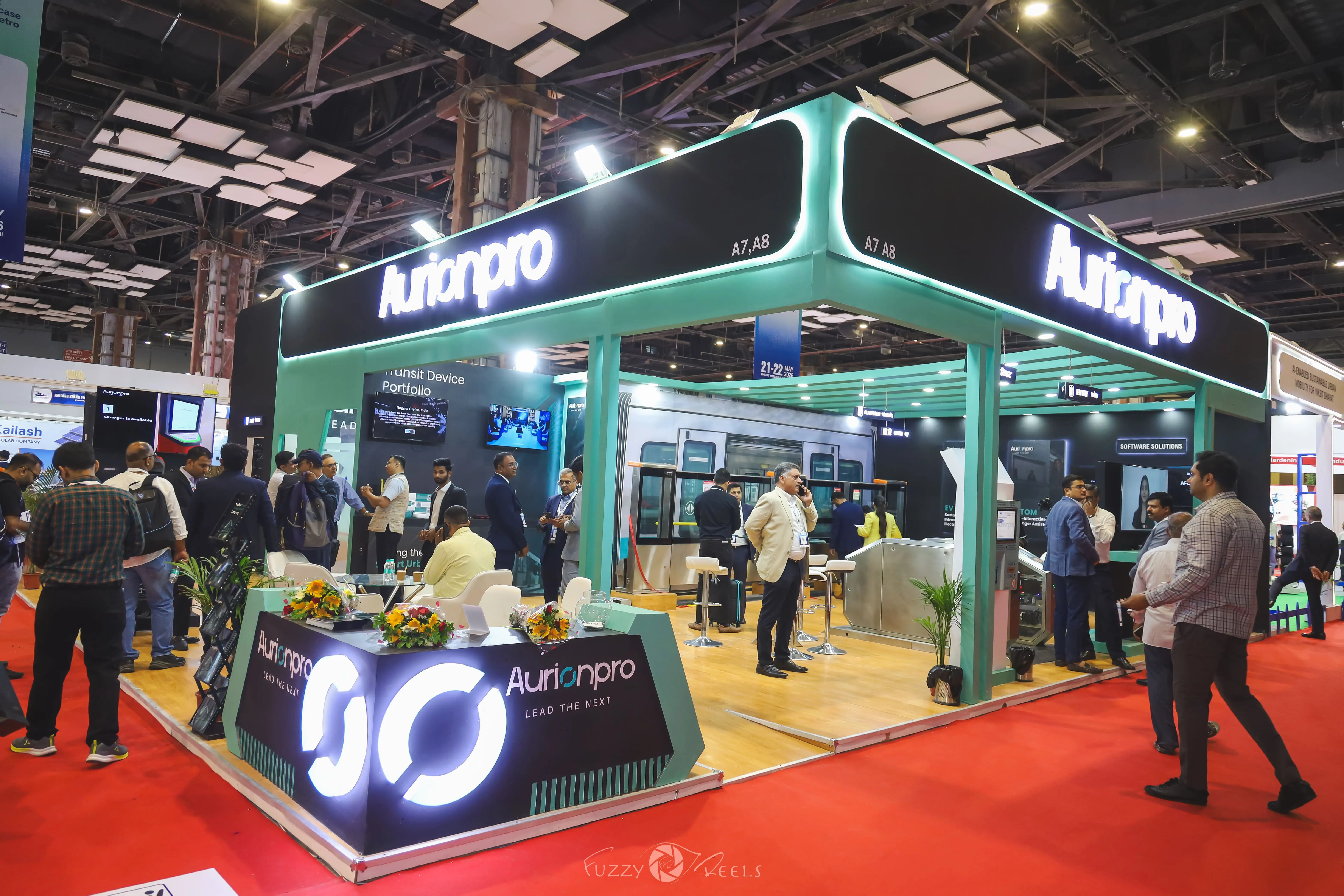
InnoMetro's 6th edition brought together metro authorities, rail operators, technology companies, and manufacturers for two days of product launches, conference sessions, and working conversations. The official theme, AI-Enabled Sustainable Urban Mobility for Viksit Bharat, set the direction, and the Bharat AI Pavilion drew significant interest as a dedicated showcase for AI-driven transit applications. The broader message was clear: intelligence, sustainability, and self-reliance are now the three axes on which India's mobility future will be built. For companies like Aurotoshi, the question is not whether to engage with that direction, it is how deep the engineering capability behind it really goes.
A few themes came through consistently across the two days.
1. Infrastructure Quality Is the Real Metric
India's urban rail expansion is no longer a story about kilometres. Station safety, fare collection reliability, platform safety systems, and passenger experience are now the benchmarks that metro operators and city planners are measured against. A metro line that runs on time but has unreliable gates or slow ticketing is an incomplete system.
This shift in how the industry thinks about success is visible in procurement conversations. Metro authorities are increasingly asking not just what a product costs, but how long it lasts, how quickly it can be serviced, and whether the manufacturer has the engineering depth to support it over a 15 to 20-year operational life. 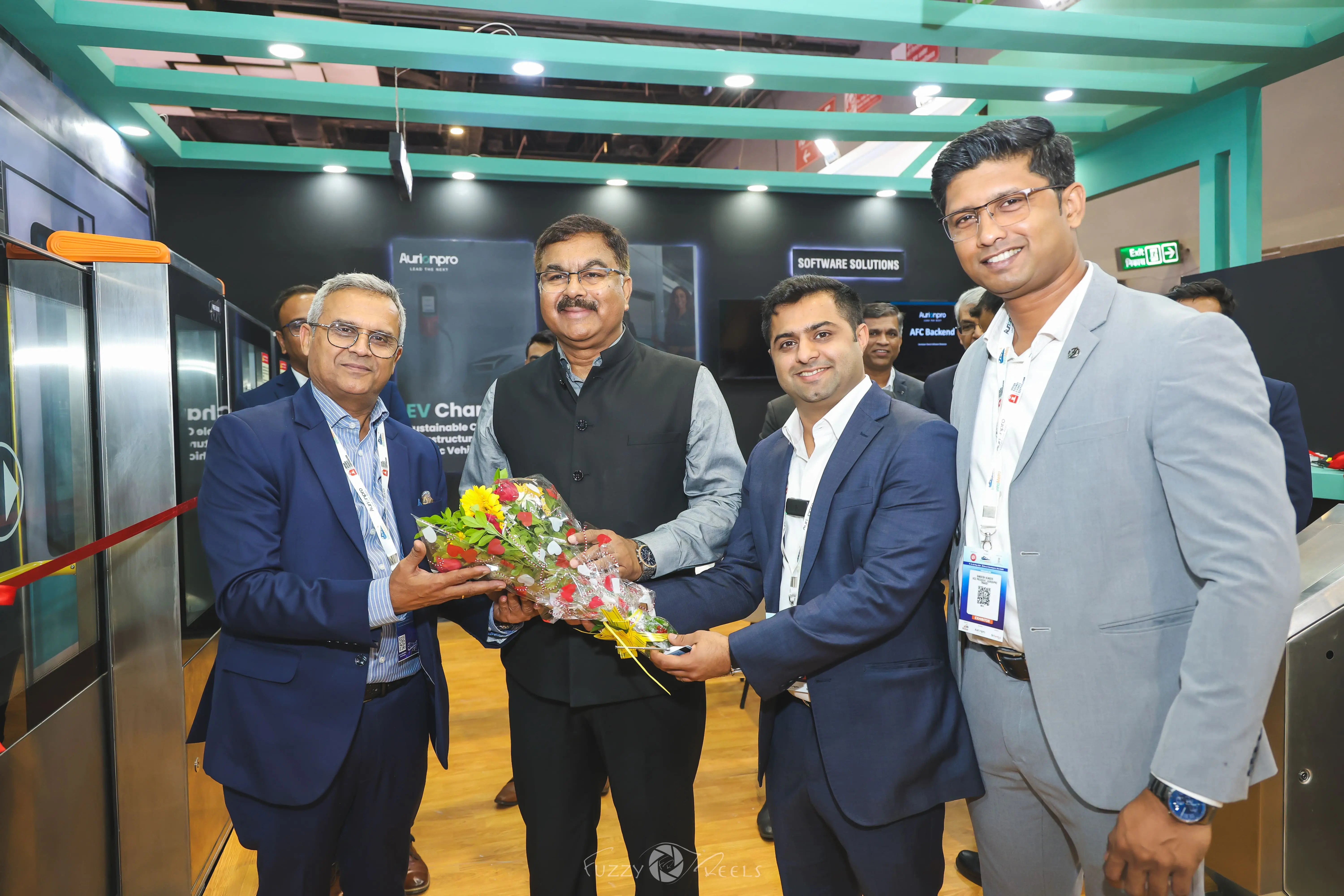
2. Make in India Has Moved Past Slogan Territory
The most significant shift at this year's exhibition was the quality of indigenously manufactured products on display. Indian OEMs are no longer presenting near-equivalents of imported systems. Several companies, including Aurotoshi, showed products designed, engineered, and manufactured entirely in India, built to global safety certifications.
Aurotoshi launched its Half-Height Platform Screen Door system at the event, the first Make in India prototype of its kind, currently under SIL2 certification. The AFC gate systems on display had crossed 80% indigenization at the company's Ghaziabad manufacturing units. These are not pilot projects. They are production-ready systems already deployed in Indian metro networks.
“We are not just a hardware company anymore. We are a transit technology company.”
— Siddhant Sachdev, Executive Director, Aurotoshi
3. The MSME Ecosystem Needs Structural Support
Aurotoshi's Managing Director, Mr. Sanjeev Sachdev, chaired the InnoMetro 2026 conference and used his platform to address something the industry rarely says plainly: the policy environment for Indian manufacturers still works against them in critical ways.
Factory approvals that take two to three years, capital costs running close to nine to nine-and-a-half percent, and procurement systems that default to the lowest bidder, these are not complaints. They are structural conditions that determine whether Indian manufacturing can compete globally or remain a domestically contained story. The call was for procurement frameworks that evaluate quality, reliability, and long-term support capability alongside price.
4. End-to-End Integration Is the Next Frontier
The conversation at InnoMetro 2026 was not just about individual products. It was about systems. Metro operators are looking for partners who can deliver hardware, software, and payments as a single integrated solution, and who can maintain that solution over the full life of the project.
This is where the Aurionpro Group's positioning becomes relevant. Across the group, the capability spans AFC hardware manufactured by Aurotoshi, fare management and transit software from Aurionpro Transit, and NCMC and ECR-One payments integration. That combination, hardware, software, payments, all under one group, is what large-scale metro projects increasingly require from a single technology partner.
What InnoMetro 2026 Signals
India's metro rail sector is at an inflection point. The infrastructure foundations are in place. The policy intent is clear. What the next phase requires is an industrial ecosystem that can deliver on that intent: manufacturers with genuine R&D depth, procurement systems that reward long-term value, and technology partners who stay through the full project lifecycle.
InnoMetro 2026 showed that the industry is moving in that direction. The products are better, the conversations are more technical, and the ambition, to design in India and build for the world, is no longer theoretical.
About Aurotoshi
Aurotoshi (An Aurionpro Group Company) is India's original OEM for AFC Gates, Platform Screen Doors, TVMs, and Industrial Automation products. Established in 1992. 3 manufacturing units in Ghaziabad. 10,000+ customers across India and globally.